If you want to really win over an audience to a space opera, strong design on the starships is essential. So what was Star Wars’ answer? It was this:
This single short sequence is, by itself, of what cinematographic classics are made of! It defined the film by showing something no one had ever seen in incredibly grandiose fashion. If you but think of it, for a moment, a mile-long starship isn’t all that special – the biggest aircraft carriers are around this size! What raises it up into the heavens? Iconic design and inspired cinematography. The term icon tends to get through around a lot but, in the case of Star Destroyers, it is deserved. In terms of shot, there are all manner of ways to shoot that sequence but the way Lucas opted to do it ramps up the size and imbalance of the contest – there’s the small fleeing ship dwarfed by this behemoth we’ve just seen in its full majesty.
It also tells you all you need to know, at this point, about the bad guys – remember, Vader has yet to make his entrance as Villain Numero Uno – they have really big but cool ships. Lucas is aware of this so the rebels get the Falcon and X-Wings, but come on, given the choice, which would you go around the galaxy in? If you’re a hotshot driver, you go for the X-Wing; if you like fixing cars, it’s the Falcon, the safe option? Mile-long mobile fortress, with squadrons of TIEs and AT-ATs and able to slag any planet you don’t like.
Yet, at the same time, you know it wouldn’t feel right. For all you can say it’s just a pile of tech, there’s something malign in the aesthetics of a Star Destroyer. A bit too big, a bit too hulking, a bit too brute force, oh it’s seductive, but why does it need to be? Because at heart it’s a really ugly bastard! In this respect, the design is a clear invoking of the technology of Nazi Germany, who made some of the most lethal tanks of World War Two. Just as a TIE fighter can be seen as a future Stuka, complete with scream, so is a Star Destroyer a tank in space.
Arguably one of the reasons for why 2001’s Gamecube sold as well as it did was Star Wars. That system had one of the all-time great Star Wars games – Rogue Squadron II: Rogue Leader. What players found was, in addition to letting you blow up the Death Star in truly spectacular fashion, you also got to take on a Star Destroyer – and it proved to be a most lethal beastie indeed. After taking it on, most players had more respect for Rebel pilots:
Of course, jump forward a few years and The Empire Strikes Back! The key question for any sequel is how to surpass its predecessor? The answer was to show that the Empire was far from dead! One solution to this is to show a fleet of Star Destroyers! And then go one step further….
What the fuck is that? Come on, it’s easy, it’s a Super Star Destroyer! Size matters, you know? But, all jesting apart – and there have been many, many hours spent on the size of the thing – what the sequence establishes is that it is a behemoth in every sense. The audience saw how big Star Destroyers were in A New Hope, now they’re seeing those massive ships be utterly dwarfed! As a way of conveying the message, with crystal clarity, that the Empire means business, this sequence is perfect.
And before anyone asks, yes, 2003’s Star Wars: Rogue Squadron III: Rebel Strike on the GameCube did have a couple of Super Star Destroyer levels!
One of my key tests for an artist on a Star Wars comic that has Star Destroyers featuring is how well they do. Some do it passably well, others truly excel – those are the likes of Al Williamson, Cam Kennedy, Steve Crespo, but perhaps the crowning glory of recent years from the comics has to be Brandon Badeaux’s work below:
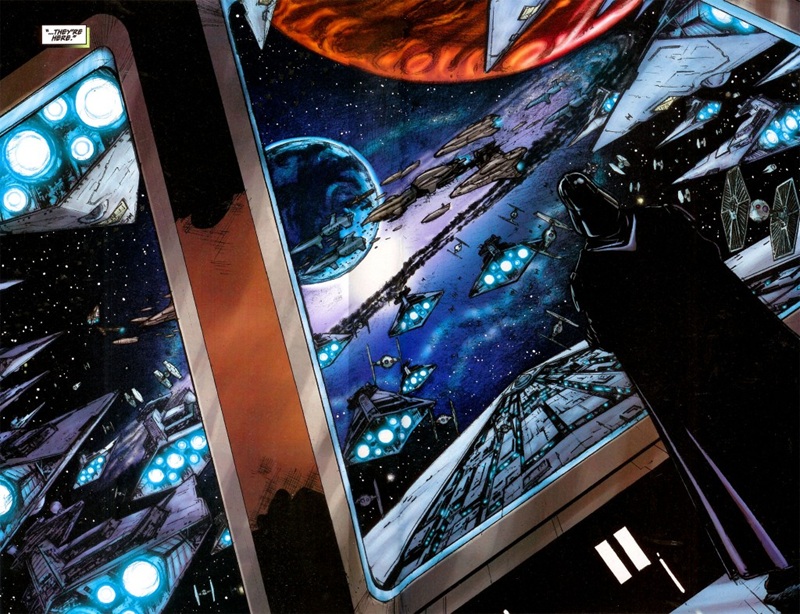
He then went and followed that up with one of the all-time great fleet battle depictions in the next issue of the series. But, then again, perhaps I should not have been surprised as this was what he did in the first one:
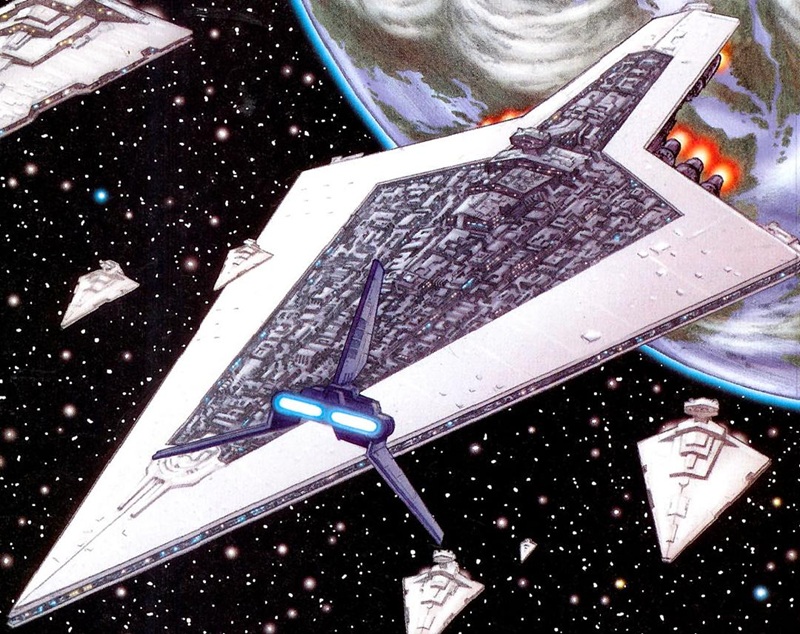
Very recently, it looks like Carlos D’Anda will be joining this elite group for his work on new Star Wars comic with Brian Wood.
Why does all this even matter? Because brilliant design stays in the minds of those who see it. After seeing a Star Wars movie, the audience should be hooked on the characters and what happens to them, but also be spellbound by the world they’ve just been immersed in for two hours. Strong ship aesthetics is a key part of that and, in a way, can be demonstrated by the lack of it in the prequel films – does anyone remember the starships of those films? No? Me neither. Star Destroyers do, therefore, deserve all manner of praise.
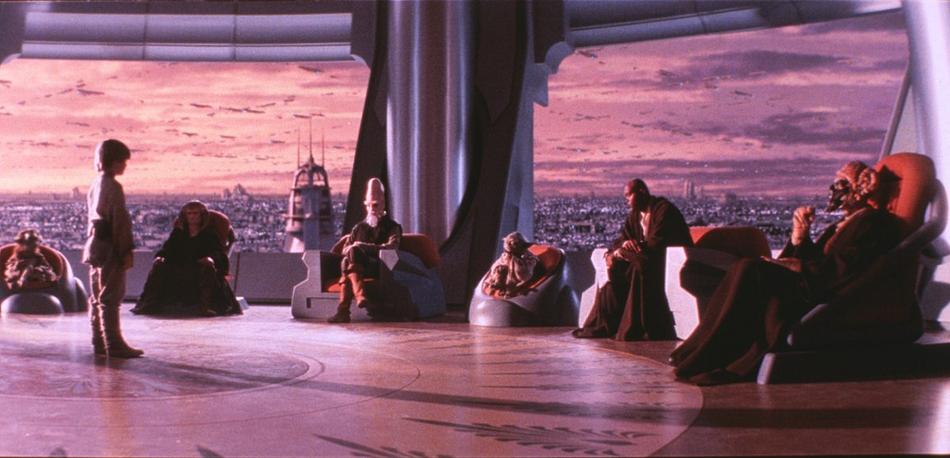
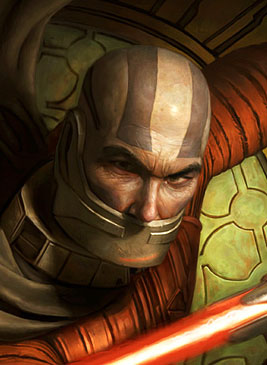 And the Sith…. Ah, the Sith must be feeling like a nice Single Malt whiskey that’s had a measure of ice to shot that’s about 500%! If you did this, you would end up with something little more than water, all that made it whiskey would have been diluted out! So it has become with the Sith – you want an army of red lightsaber swinging bad dudes? Easy, there’s loads of them hanging around the place – just entirely forgotten about.To be fair Legacy‘s Sith, in the comics, have a fair amount of variance, but The Old Republic? It’s an army headed by an Emperor type, KOTOR has but two Sith Lords, clearly echoing the prequels’ notion. Vader? Well, as an enforcement heavy, Darth Malak does look the part.
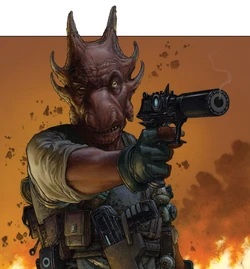 Perhaps better to ask what characters there are that are deemed as equal to the lead human characters? In this respect, it seems the best examples in recent years can be found in comics. Knights of the Old Republic alone gives us two very well-realized characters in the form of Jarael and Gryph, the latter of which has his own fanbase! Dark Times has Bomo and the crew of the Uhumele, all well-done characters. In both cases we don’t see either Zayne Carrick or Jass Dennir attempting to steamroller them into submission, although it isn’t in their character to do so. Stazi, already mentioned, tends to take center stage in any story he’s in and then there’s Jedi Master K’Krukh…
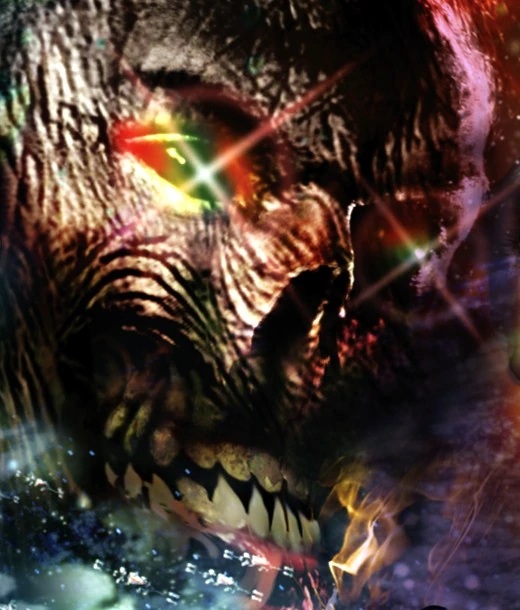 I am the least likely person to write an article like this. Why? The Yuzzhan Vong were the villains of the New Jedi Order series and, to put it mildly, I’m not a fan. Oh, it has its moments, it has its high points and those it does very well, but it’s still nowhere near enough to move me to the “fan” column. So why on earth write it? Because of what happened after New Jedi Order….
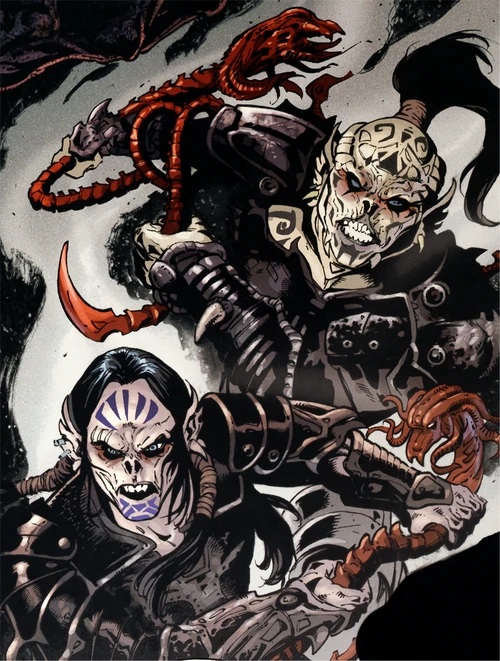 So we have the Vong becoming far more than they ever were previously. We have the Jedi backing their offering, which aligns well with the Jedi belief in atonement and redemption for previous failings. We have a government that supports the Jedi in this – given the direction taken in recent years in the late post-Episode VI Expanded Universe, this now looks utterly revolutionary! And they all pay a heavy price indeed, as a vengeful galaxy, manipulated by the Sith, give into their inner demons rather than their angels.
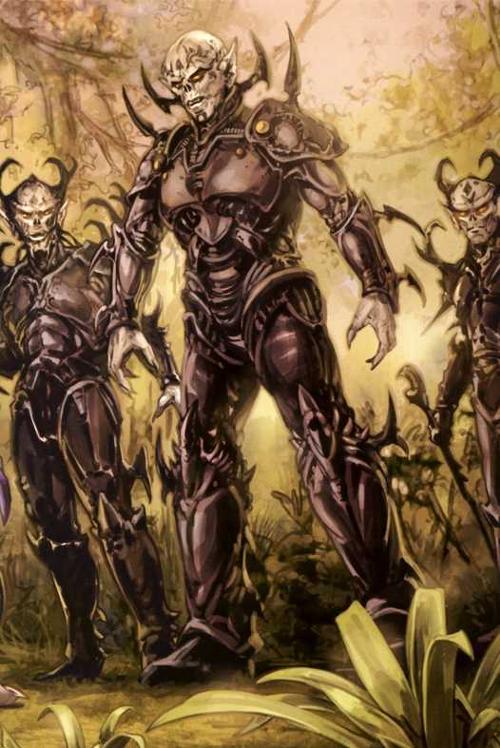 By 2009, there was some interest in a return to the mad, bad Vong – which is why there was so much interest in Invasion when it was announced. X-Wing: Mercy Kill followed in its footsteps. But didn’t people hate the Vong? While the New Jedi Order was in flow and the final outcome unknown, that was certainly the case, but now? Now the story is done and the overall shape known for over a decade, it will obviously be seen differently. Certainly, for me, the flashbacks made the case for, at the very least, a Tales of the NJO anthology. Unfortunately, these are no longer done either – though the Lost Tribe of the Sith Omnibus is a rare exception.
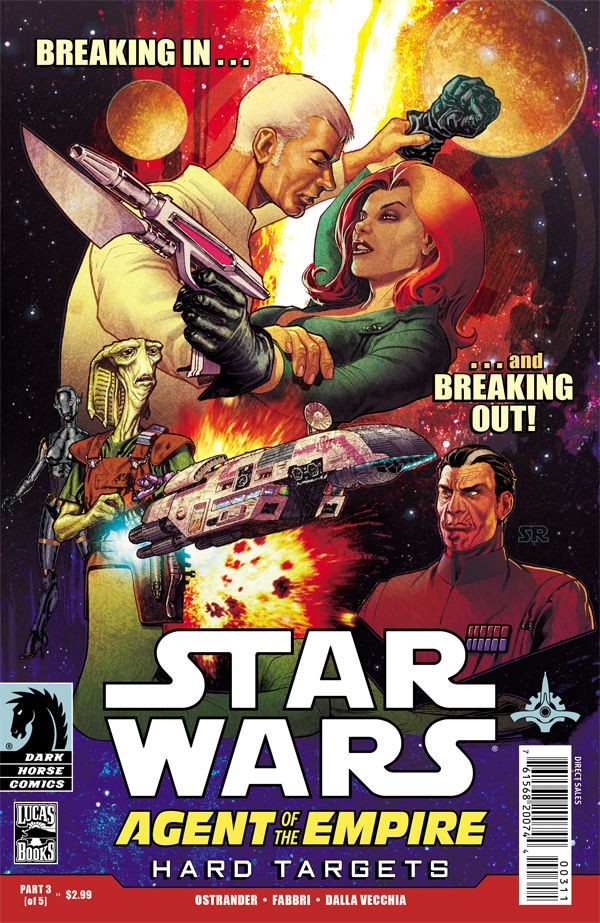 This was a truly illustrious series, cruelly cut down in its prime! That Dark Horse Comics felt unable to continue with one of the strongest creations in years is a damning indictment of the comics marketplace, but also of consumer patterns and outlooks.