Looking back at my previous article Last Stands and Final Moments: When Killing Your Hero Works and When it Doesn’t I feel like I did a disservice to Michael Stackpole and Aaron Allston by not including people from the X-wing Series. I was trying not to go overboard with characters and didn’t feel like I could pick just one without going for an in depth discussion of all of them. So thus, Part II of Last Stands and Final Moments was born. My last article on this topic sparked some good discussions along with requests to look at a few other characters so if you have other requests please pass them along. As crazy at it sounds, I still enjoy nothing more while reading a book than having an author correctly kill off a beloved character while making me feel the loss as if I were there in the story with the other characters. I believe this is one of the reasons I continue to pick up Star Wars books. The beginning of the EU saw several character deaths that were so well done that it is possible I’ve been spoiled with a high standard of how a character should be written to exit a series. Read More
Star Wars and Genre: Superhero Fiction

With Captain America: The Winter Soldier coming out tomorrow (in America, the nation that is in the name of the damn movie yet somehow getting it last), it’s timely to address Star Wars’ relationship with the superhero genre. Thanks to the Jedi’s powers and its expansive continuity, it has more than a little in common with superhero universes, but less has been done with those similarities than you might think.
The superhero genre, long restricted primarily to primacy in comics but now becoming the dominant form of movie blockbuster as well, is best understood as stories about outstanding heroes endowed with superhuman or unrealistically optimal abilities who make careers of fighting evil under a distinct identity. The tropes of the genre — secret identities, costumes, supervillain rogue’s galleries, superhero teams, origin stories, interlocking shared universes, fuzzy continuity, sliding timelines, temporary deaths — should be familiar to most of the general public, let alone the geek community.
Star Wars lacks a lot of those tropes. Its heroes operate in the open, not hidden behind masks and nicknames. They tend to face villains sequentially and beat them, rather than constantly matching wits against the same pool of bad guys. Star Wars’ continuity is, in principle and usually in practice, sharp and its timeline immobile, its deaths mostly permanent. But there are similarities worth noting.
What Star Wars Can Learn From Glee
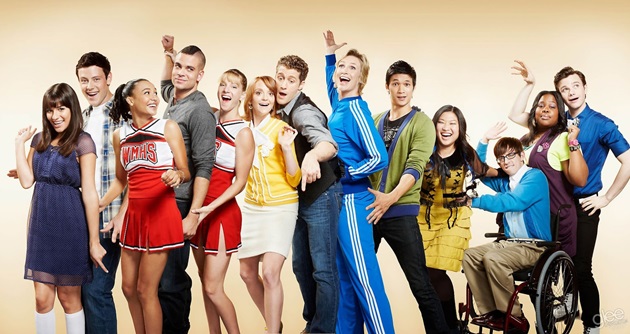
As we’ve said over and over on this site, D-Day didn’t just mean more Star Wars movies—it meant a new paradigm entirely for the franchise. The old ways of attracting new fans are slowly but surely producing diminishing returns. It’s time, I believe, for Star Wars to expand its horizons, and take lessons not just from other successful “geek” franchises, but from all sorts of broadly popular media, so as to attract new generations of people who aren’t already lining up for Comic-Con every year.
One great example of a franchise that’s phenomenally successful, critically beloved, and primed for crossover pollenation with Star Wars is, of course, the TV series Glee. Allow me to extrapolate. Read More
My Way or the Hyperlane – Feminism, Slut-Shaming and the New Fan Conservatism
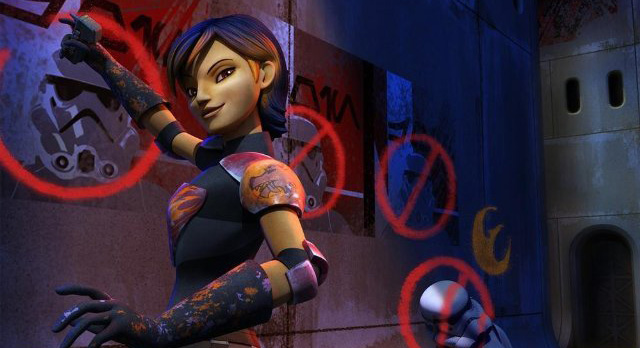
Mike: In addition to the many, many larger conversations that sprung up in the wake of the reveal of Star Wars Rebels‘ main cast of characters last month, some of us here at Eleven-ThirtyEight noticed an odd undercurrent to people’s reactions to both Sabine and Hera; well, maybe not odd, but unfortunate. Loosely speaking, it seemed as if people had certain preconceived ideas about what a good female character should be like, and were judging the females of Rebels one way or another less by their apparent merits and more by what they found “acceptable” for Star Wars—or even for popular fiction generally.
This warranted a response of its own, I felt, but as someone who’s fully aware of the specter of “mansplaining”, I asked guest writer Mia Moretti, author of the aforelinked™ “race factor” piece, to join me for a discussion of these issues. Read More
Star Wars: for all ages, all of the time?
Star Wars is meant for kids. George Lucas agreeing to take the rights to sell T-shirts and lunchboxes and plastic snowtroopers in lieu of a pay hike is proof of that. Star Wars has always been meant for kids. But it was its ability to draw in everyone else that made it one of the most commercially successful films in history. Adjusted for inflation, only Avatar and Gone with the Wind fare better. Despite its monolithic cultural influence, no other Star Wars movie comes close to beating A New Hope.
Far more intelligent people than I have tried to explain why the prequels were seen by so many as a disappointment, but it was never really the children that it disappointed. There’s a complicated discussion to be had about whether that’s because kids will accept anything as long as it’s shiny or whether adults are just cynical and greedy, but I think it’s fairly uncontroversial to say that the prequels focused more sharply on that younger demographic. The Phantom Menace, in particular, set the tone, with its Roger-Roger tin-can comedy bad guys, a nine-year old protagonist and everything to do with the Gungans. But even Revenge of the Sith, the only movie in the trilogy not to be granted a fully family-friendly rating, spends its opening see-sawing between Artoo’s slapstick cargo bay antics and Anakin’s adventures in dismemberment and beheading. Read More