With the possible exception of the lightsaber, the most iconic aspect of the Star Wars saga is its starships. When audiences first saw the Rebel Blockade Runner fleeing from a massive Imperial Star Destroyer, it was apparent that the Star Wars universe was going to show starships of a different sort when compared to other science fiction. Instead of retro-looking rocket ships or silver saucers, ships were incredibly detailed, showed wear & tear, and set the pace for all science fiction movies to follow. Just as the Prequel Trilogy of the past decade showcased designs that were intended to appear as the precursors to the famous starships of the Original Trilogy, the new ships of the Sequel Trilogy should be their logical successors.
While I have no doubt that the good folks at Lucasfilm and Industrial Light & Magic will create some incredible new starships, they would do well to look to the Expanded Universe for inspiration as well. Nearly two decades of novels, comic books, and video games have produced hundreds of incredible designs that would fit perfectly into the Sequel Trilogy or spinoff movies. Therefore, I propose the following five vessels from the Expanded Universe that should have a place in Episode VII.
THE TOP FIVE
1. The E-wing Starfighter
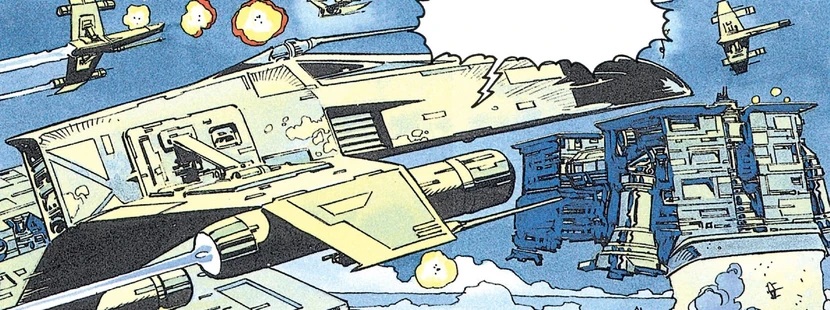
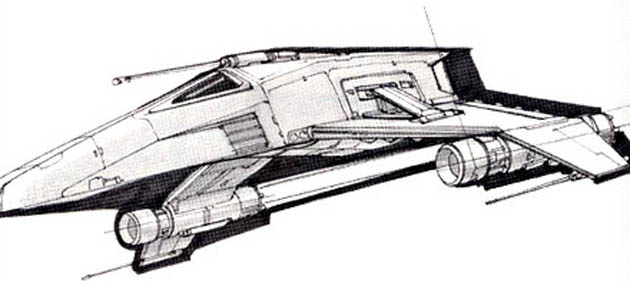
The toughest act to follow for the Sequel Trilogy will be the X-wing starfighter. Easily one of the most recognizable ships of the Star Wars saga, the fighter was the personification of the Rebels’ war fighting efforts. While it may be tantalizing for the creative minds behind Episode VII to use this fighter, the Expanded Universe already has a fighter that would serve as a great follow on to the X-wing. First shown in the comic miniseries Dark Empire (which was so loved by George Lucas that he gave copies to the staff at LFL one Christmas), the E-wing assault starfighter would be the perfect frontline weapon of the new Republic. With a nose and main fuselage that evokes the X-wing’s lines but more angular and possessing a pair of bent wings, it hearkens back to both the famous Rebel fighter and the ARC-170 of the Prequels. With three laser cannons and a powerful number of proton torpedoes, the fighter is the GFFA version of the F/A-18 Hornet, capable of dogfighting and assaulting larger targets.
Admittedly, the E-wing has a tough row to hoe. The EU tried on several occasions to make the craft the New Republic’s primary fighter, only to be repeatedly ignored and replaced by the ubiquitous X-wing. The fighter, for better or worse, is so iconic that few EU authors are brave or creative enough to retire it. Instead, we have literally gone through a dozen or more variants of the X-wing. Hopefully, the only X-wing in the Sequel Trilogy will be used by an aged Jedi Master Luke Skywalker out of nostalgia. Either way, whether as a primary fighter or in support of the X-wing, the E-wing fighter can and should be in Episode VII. Read More
Ah, the Clone Wars. Where to begin? Always controversial, the Clone Wars presents a veritable motherlode of potential discussion topics, from the characterization of the Jedi, to the failure to employ original characters to the extent of the post-ROTJ EU, and extending beyond those to the innumerable discussions of clone troopers. There have been a lot of let downs in the Clone Wars era, and a lot of missed opportunities to make that conflict have the dramatic heft it truly deserves. One aspect of the juvenility of the Clone Wars is simple: the lack of a truly compelling villain. We’re told that there are heroes on both sides, but – if you’ll excuse the mixed metaphor – we rarely ever see that grand-sound phrase ever ring true.
A lot of ink has been spilled – and electrons shuffled – over why the Separatists are cookie-cutter caricature villains. We need not dwell on that aspect too heavily. Suffice it to say that the EU – and The Clone Wars animated series in particular – has singularly failed to answer the question of why anybody would ever want to be a Separatist in the first place, if the movement and its supposedly charismatic leader waste no time in subjugating its erstwhile allies at the nearest possible opportunity. Instead of providing a catalogue of the various ways in which the EU has failed to convincingly portray a credible Separatist cause, I thought I would instead propose three changes that would have made the Separatists good villains.
These changes are not strictly political – indeed, this article is more about how the political faction that was the Confederacy of Independent Systems could have been a more credible group.
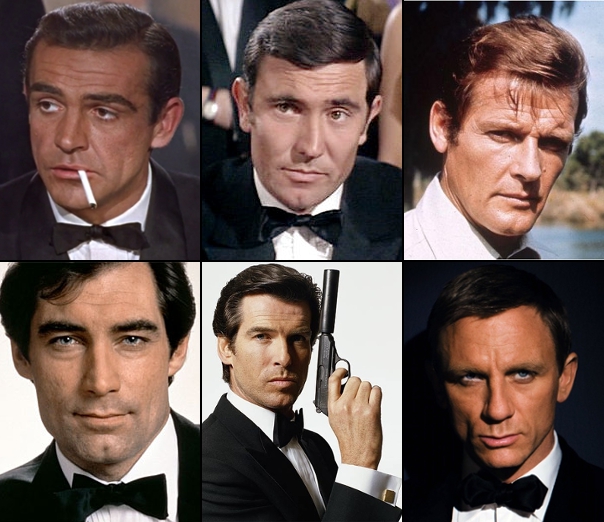
When I say “spy,” you think of this guy. Well, one of these guys. Or maybe all of these guys. But you think about them.
“Spy fiction” may conjure images of the Cold War, but the genre was already well-established beforehand and has remained incredibly popular long after the collapse of the Soviet Union, permeating film, literature, and television. It’s true that spy fiction blossomed as espionage took center stage in the Cold War, but it was born decades earlier in the balance-of-power struggles of the European great powers, matured in the World Wars, and continues in prominence with the centrality of the intelligence community to the War on Terror. Stories of spies, assassins, saboteurs, analysts, and secret agents have played an important role in our entertainment for a long time, and it is worth considering how they could apply to Star Wars.
From the globetrotting adventure of the James Bond films to the brooding gravity of John le Carré’s novels, spy fiction comes in many forms. The wildly different tones of such major spy TV series of the last decade as Alias, 24, and The Americans attest to the diversity of stories in the genre. Protagonists can be super-competent killers like Jason Bourne or mild-mannered bureaucrats like George Smiley. What unites the stories is their focus on the complex and dangerous world of espionage and its many storytelling opportunities.
The Star Wars films have taken advantage of some of those opportunities and contained some espionage elements. A New Hope‘s plot was driven by a set of stolen blueprints to an enemy weapon system. In Return of the Jedi, spies discovered the existence of the second Death Star, only for that information to be revealed as the result of a wartime intelligence effort by the Empire designed to bait the Rebellion into a trap. Attack of the Clones featured political assassination attempts which led Obi-Wan to investigate their source, discover a secret clone army, and learn the war plans of the Confederacy of Independent Systems.
Many Bothans died to bring you this storyline
The films did not make espionage a significant theme, however; the real intelligence efforts in the original trilogy happened almost entirely offscreen. There were no spy or secret agent characters. Consequently, spy stories have not gotten a great deal of attention in the Expanded Universe. Main characters occasionally go on secret missions or must unmask a spy, but these are usually cast as general adventures.
Espionage is most often one element of a larger story. Timothy Zahn’s novels, with their focus on the importance of information, did more to incorporate espionage elements than most others. Thrawn’s Delta Source and the New Republic’s consequent counterintelligence effort; Thrawn’s black ops against Leia, Ackbar, and Mara Jade; the missions to obtain information about Thrawn and the Katana fleet; Wedge, Corran, and Moranda Savich’s counterintelligence operation on Bothawui; and the various efforts to obtain the Caamas Document all reflected spy fiction elements.
The most prominent intelligence-oriented stories for a long time were those of the Wraith Squadron novels, but they mixed intelligence work with battlefield action sequences, resulting in more of a genre hybrid. The recent X-wing: Mercy Kill moved the Wraiths more fully in the direction of intelligence operations, but most straight spy stories have been of lesser prominence. A pair of short stories Aaron Allston wrote for Insider featured Old Republic intelligence officer Joram Kithe during the Clone Wars, but the tales are not well-known. More famous during the Clone Wars is the storyline of Quinlan Vos, a Jedi working undercover as a mole inside Dooku’s circle of Dark Jedi.
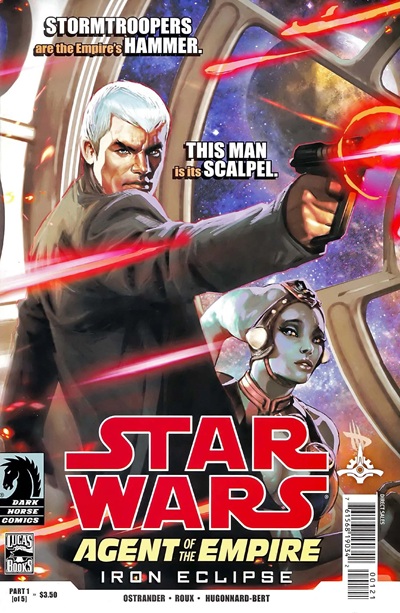
Agent of the Empire: James Bond meets Star Wars
It took approximately thirty-five years for the arrival of the first prominent story marketing itself specifically as Star Wars spy fiction: the Agent of the Empire comic series, starring James Bond pastiche Jahan Cross. The comic only made it through two arcs before it was canceled, but the adventures of its secret agent protagonist perfectly captured the Bond spirit.
I believe that there is room for a great deal more spy fiction within the Expanded Universe, however. Espionage scenarios are well-suited to adding variety to wartime stories. Rather than yet another story where Luke, Han, and Leia battle the Empire, stories in which they work to convince an Imperial to defect or turn double agent, work with a local cell of Rebels to identify a mole, or engage in an elaborate scheme to feed the Empire false intelligence could provide strong hooks for fresh stories. Likewise, there have been more than enough stories of Obi-Wan and Anakin chopping up battle droids and dueling Ventress; I would like to see a few more in which they go undercover or focus on intelligence-gathering or sabotage behind enemy lines rather than attacking.
Spy fiction also presents an excellent mode for stories outside the galactic war context. Intelligence operations are well suited to providing tension and action in a smaller-scale peacetime context. When big battles are not available, infiltration, covert operations, and counterintelligence give the heroes avenues for action and offer Jedi unique challenges they cannot overcome via brute-force application of the Force. Ferreting out Sith operatives from the Lost Tribe could provide Jaina and Ben something to do without another galactic crisis, while prequel-era stories might call upon Obi-Wan and Qui-Gon to infiltrate a gang of smugglers or terrorists and gather information on their operations.
There is also the potential of adding spies as characters. Luke, Han, Leia, Obi-Wan, Jaina, and the other main protagonists cannot function purely as spies, though they can sometimes play a spy role. Characters who function purely within the intelligence community, however, can bring greater presence of spy elements into the Expanded Universe. Whether it be as supporting characters — an intelligence service chief who provides the heroes with information, Wraiths or other agents who work alongside the heroes on missions or hold down spy plotlines within mainline books and comics — or as main characters in their own side stories, intelligence personnel and others in spy roles could provide storytelling diversity to the universe.
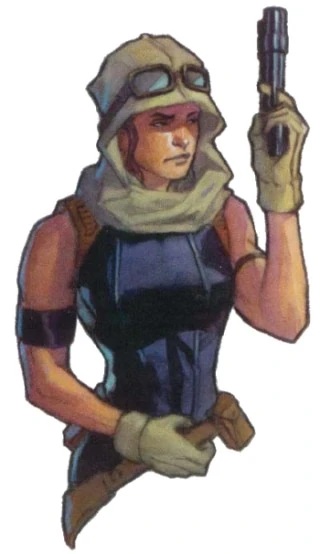
Mara Jade, the most famous secret agent in Star Wars
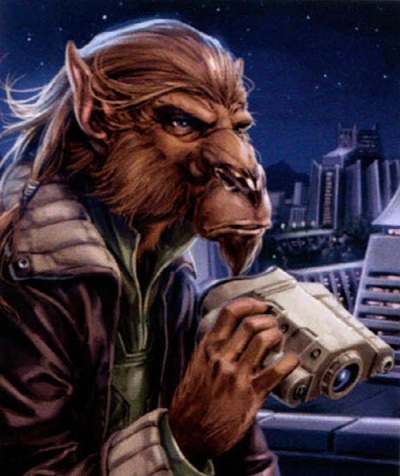
I am especially intrigued by the possibilities of spies as leading characters. Jahan Cross’s adventures were incredibly fun and fresh, marrying diplomatic intrigue with assassination, undercover work, and pulpy action setpieces. More of that sort of secret agent storytelling would be refreshing; with luck, Mercy Kill will spawn more Wraith novels. A member of the Bothan Spynet could provide limitless opportunities for spy storytelling as a lead character. A taut tale of a Rebel cell operating in secret, trying to avoid the Empire’s counterintelligence agents, would be a change of pace. The ambiguity of the Clone Wars, in which a Republic sliding from decadence to tyranny battled an outwardly idealistic but secretly corrupt Separatist movement, could be perfectly captured by a novel or three about disillusioned, morally compromised spies. The post-New Jedi Order period, desperately in need of non-Jedi supporting characters, could catapult the Zel twins into greater prominence by giving them a spy novel — something Blood Oath may have done if it hadn’t been canceled. Mara Jade could be well served by a book or comic series set during her time as the Emperor’s Hand that isn’t weighted down by additional leads, and her name recognition would give such an effort a better chance of success.
In a franchise that could always use more variety in stories and protagonists, spy fiction offers an easy avenue to expand options with a genre the public loves. Tales of assassination, sabotage, informants, secrets, and double agents are a longstanding element of our entertainment and mesh perfectly with the adventurous, action-packed universe of Star Wars. I am tremendously disappointed by the premature end of Agent of the Empire, but I hope to see more spy stories from the Expanded Universe in the future.
One of the first bits of news to accompany D-Day was that Lucasfilm would be looking into “spinoff” films in addition to Episodes VII, VIII and IX. And one of the first rumors to follow that news was that one of the spinoffs would feature Yoda—a rumor that was eventually, seemingly, quashed.
Maybe that’s the case, maybe not. But if the films aren’t doing it, I am here to make the case that the books should.
For starters, I should distinguish between the desire for a young Yoda story and the desire for a Yoda origin story. Leaving aside the possibilty that Lucasfilm was considering a “modern” Yoda movie as opposed to either of those—for my taste, I don’t think the one has to necessitate the other. To tell of Yoda’s origin, as it were, would require that to be an interesting story in and of itself, and I like to think that longevity notwithstanding, he started out as any other Jedi of his time would have—plucked from his home planet and raised in the Jedi Temple. There’s story potential there, sure, but it’s not exactly screaming out at us, I don’t think.
Now, Yoda’s knighthood, on the other hand—there could be some interesting tales, and if the creators were able to free themselves from the expectations attached to an origin story (something that’s been known to help the oddsuperhero moviea great deal), I think depicting the character in his “prime” (which of course, for Jedi, would mean that much to learn he’d still have) amidst an Old Republic also in its prime could lead us down many interesting avenues.
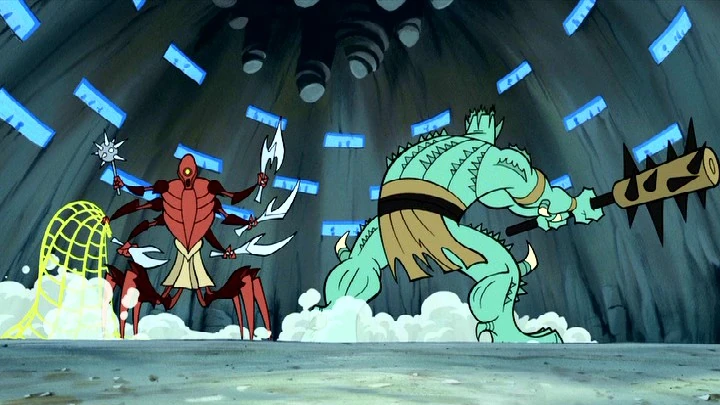
Size matters not: do you suppose that Yoda’s crazy-old-troll shtick in ESB was the first time he’d taken advantage of his unusual appearance and stature to test someone’s measure? I think not. Imagine opening the story in a great arena, pitting “great warriors” from across the galaxy against each other. And into the great expanse of Wookiees, Gamorreans, Trandoshans, and hell, maybe even a rancor, strolls little ol’ Yoda, prodded inside by a couple hapless guards. The rest kind of writes itself, doesn’t it?
Age matters quite a bit: did you ever consider that with extended longevity, there might also come extended adolescence? What would it be like to be a Temple youngling who doesn’t reach maturity for fifty or sixty years, while all your friends seem to outgrow you and move on to big, illustrious careers? Or worse, you’re chosen for Padawan status by a great Master who then dies of old age before your training is complete?
Lastly, I have a simple thought exercise for you: pretend I’m totally wrong about that last point. Based on Lumpawaroo and Lowbacca, we know that the long-lived Wookiee species reaches maturity at roughly the same speed as humans, then goes on to extended periods of relative adulthood, so say the same thing happens for Yoda. What’s the one other thing we know about his early life? He claims to have trained Jedi for eight hundred years. Eight-ninths of a lifespan seems pretty damn good by human standards, but when you stop and look at it, even allowing for some rhetorical wiggle room, that seems to suggest that Yoda was nearly a century old before he first took a Padawan. I’d bet that there’s a hell of a story to be told about that, wouldn’t you?
And all this, just for the record, is not to say that I need to know Yoda’s species. Really think about it for a minute—unless they did shoot the moon and make him a Whill, how could they possibly answer that question in a satisfying way after all these years? Remember a while back, when George Lucas told Jon Stewart Obi-Wan’s home planet was “Stewjon”, and as the fandom collectively rolled its eyes, into the Holocron it went?
I ask you this: what could he have said that would’ve been any better? Fans—and I include myself here—often have an anal retentive need to check every little box on their favorite fictional characters. Height? 1.82 meters. Weight? 77 kilograms. Midi-chlorian count? 4,872 and a half. [1]I, of course, pulled this one out of my ass.
So once we know everything about Obi-Wan but his shoe size, it can be frustrating, year in and year out, to have a big empty spot on Wookieepedia next to “Homeworld”—but it’s equally frustrating to have it filled in haphazardly, as Lucas is wont to do, because deep down we want that information to have been worth the wait—we want to hear, say, “Commenor”, and react with a knowing sigh, as if that fills in some crucial piece of the character puzzle that’s been hidden under the carpet for thirty years. But really, it’s ephemera; nothing more, nothing less.
Bottom line: we shouldn’t want Yoda’s origin, or anyone’s, just to fill in a blank—we should want it because it could be a great story.
There are things everybody knows about Star Wars, about what the universe contains, about the make up of that Galaxy Far, Far Away. Or at least, there are things that everyone believes they know. The actual truth may be buried elsewhere in the fiction, in the mismatch between narrative perception and what actually appears on the page.
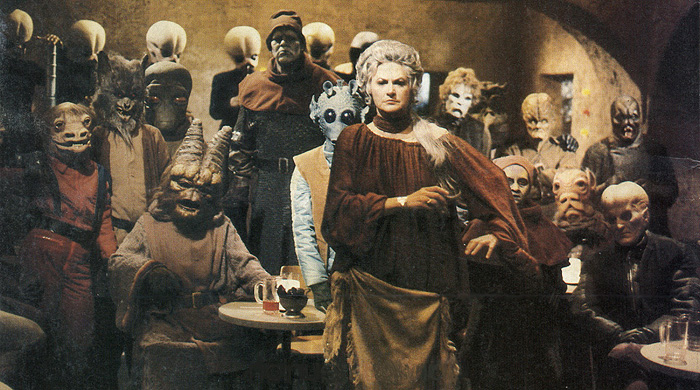
Numbers are one way to peer into that chasm. Unambiguous and absolute by nature, numeric values can be manipulated in ways purely qualitative data cannot. What follows is the first of a series of explorations into what the number can, and cannot, tell us about the Star Wars galaxy. The initial subject is alien populations, and the distribution thereof. Particularly, how often do aliens appear in Star Wars media, and which ones show up when they do?
Note: the following discussion relies heavily on information derived from Wookieepedia, the Star Wars Wiki. This is not ideal, as by its very nature wiki data is incomplete and filled with errors. However, it is the best source available on our beloved fictional galaxy. And the only one with the requisite data volume.
In order to look at the demographics of Star Wars, it makes a certain sense to start by taking absolutely everything together – all characters recorded in all works. This fits with the principle of a single continuity that has so far governed the EU. Additionally, this information has already been recorded, in terms of ‘Individuals’ on Wookieepedia. Read More