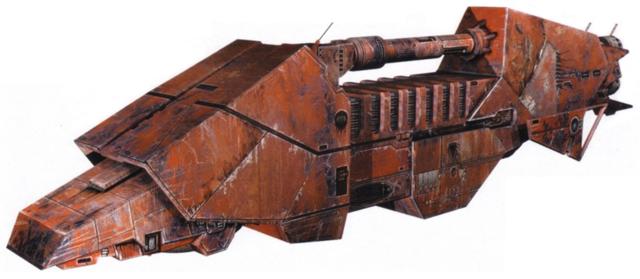
The Sequel Trilogy is going to need some unsavory characters and who better to lead them than someone who already exists: Talon Karrde. First introduced in Timothy Zahn’s Heir to the Empire this character’s story soon takes on a life of its own as he plays both the Empire and the Rebellion in an effort to make the most money and save himself. Paired up with Mara Jade, Karrde brokered information in an organization that would rival any in the galaxy. In a time when our known scoundrels like Han Solo and Lando Calrissian were becoming somewhat respectable, Karrde filled the role of semi-reputable smuggler. As a reader it was a breath of fresh air when comparing Karrde’s organization to that of the Hutts from the movies.
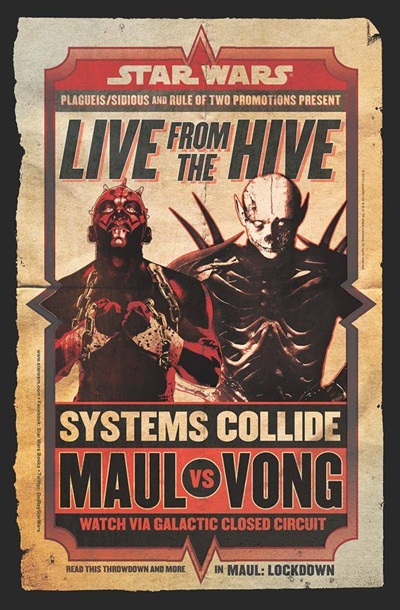 In last week’s new release Maul: Lockdown, Darth Maul is sent to uncover a reclusive and mysterious arms dealer hiding out in Cog Hive Seven, a space-based prison whose architecture is infinitely rearrangeable. This has two benefits: one, escape is much more complicated when the route out of your cell is constantly changing, and two, it allows Warden Sadiki Blirr to pick any two inmates and smack them together like action figures. The resulting deathmatches are then broadcast to the galaxy for gambling purposes, with Blirr herself collecting a healthy piece of the profits. This system of near-constant combat makes up the spine of Lockdown‘s bloody proceedings, and while the Rubix-Cube-like concept of Cog Hive Seven is a novel approach, the general premise of gladiatorial combat has a long and storied history in the Galaxy Far, Far Away, dating almost all the way to the beginning of the Expanded Universe.