Senseless Sexism in the Galactic Empire

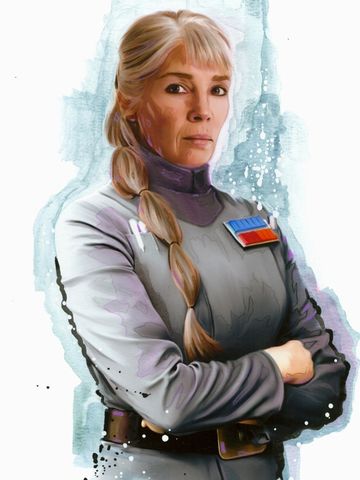
daala-ercRecently on the Imperial Court Circular, we’ve discussed the gendered aspects of fan service as well as the elements of what makes the Galactic Empire the primary Star Wars antagonist. Today we’ll blend issues of the sexes and the Galactic Empire by discussing one of the Galactic Empire’s most enduring and iconic traits: institutionalized misogyny.

As we’ve discussed on this site in the past, the Galactic Empire has particular political and historical antecedents: among them, Nazi Germany, Imperial Rome, the British colonial empire, and even certain American presidential administrations. The Empire has taken many traits and trappings from these inspirations, from Nazi-styled military uniforms to a political organization that reflects the rise to power of figures such as Julius and Augustus Caesar, Napoleon Bonaparte, and Adolf Hitler. The tone of the Empire reflects both the successes – particularly of the more positive British and Roman examples – and darkest traits of these inspirations: military dictatorship, pervasive propaganda, and racial bigotry (in the case of the Galactic Empire, anti-alien bigotry).

Sexism never made much sense as being one of those defining traits of the Galactic Empire. Sexism in fiction generally has two authorial justifications: first, as a reflection of actual historical sexism in the setting of the story and second, as an attempt to engage and criticize contemporary sexism through the lens of a fictional story. Since Star Wars is an invented universe, the first justification is a bit of a reach despite the historical inspirations for the Galactic Empire, and the second justification is unconvincing because of the EU’s failure to adequately address in-universe sexism in a constructive fashion.
Read More

The Expanded Universe Explains, Vol. VI

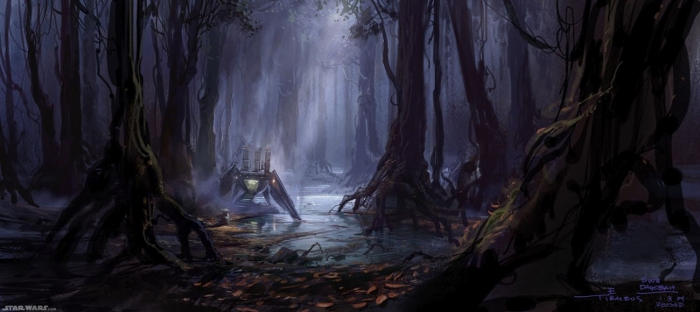
yoda escape pod concept

13. How did Obi-Wan know where Yoda was?

First, some background.

Dagobah, while not being at all noteworthy in a political sense, is a fairly noteworthy planet as far as the Force is concerned. It was “discovered” and subsequently forgotten multiple times over the years, and one survey team actually found that life there was abnormally ripe for genetic and medicinal research (remeber Luke’s “massive life form readings”?). Likewise, one of the reasons Yoda chose to hide there was because it was so choked with myriad other life forms that his own Force presence would be largely subsumed and harder to detect. Whether the strong Force signature caused the biological potency or vice-versa is pretty much a “chicken v. egg” situation, so it’s easier to just look at Dagobah as the Amazon rain forest of the Star Wars galaxy—teeming not just with life, but with an abnormal variety of life with abornally unique properties.

One thing that tends to bug hardcore Expanded Universe fans is the unusual amount of important events and/or people on Tatooine—a planet that’s very explicitly stated to be the ass end of space, but is constantly revisited due to its iconic status. Dagobah has a similar problem, relatively speaking, but its role as a major waypoint in the Force-User’s Guide to the Galaxy is, as I’ve discussed before, the ultimate get-out-of-jail-free card where coincidental arrivals are concerned. As such, there are a couple options for the origin of the dark-side cave, but the most likely candidate these days is a duel between an errant unnamed Dark Jedi Master and the Jedi Knight Minch—who was sort of a wink-wink, nod-nod stand in for a younger Yoda himself—in 700 BBY. The Dark Jedi was killed, leaving a stain on that location around which the cave eventually evolved. The origin of this story was a reference all the way back in Heir to the Empire to Yoda killing a Dark Jedi there; Lucas gospel, however, maintains that Yoda had never been to Dagobah prior to Revenge of the Sith, hence the stand-in. The death of a major dark-sider leaving a mark like that is pretty standard fare; in fact, one of the more creative fan theories going around in the early days of the prequels was that Naboo would somehow become Dagobah, and the cave was the spot where Darth Maul had died.
Read More

Everything is Interconnected and Interdependent: KOTOR II and the Religions of India

In Knights of the Old Republic II, a motif of echoes and vibrations is woven throughout the narrative, particularly with regard to the Force, and to the actions of an individual. Many of the characters, from the fallen Jedi Kreia to the adorably psychotic assassin droid HK-47 voice notice of how the actions of an individual, a group, or something more metaphysical can create a cascade of after-effects- ‘echoes’, or ‘resonance’, as they are termed in the game.

HK-47 comments upon how, by mistranslating a single word, an interstellar war between several insectoid species was instigated, and through this war the Republic was able to gain influence over an entire sector, shoring up the rapidly failing galactic government. Visas Marr, in her first scene with Darth Nihilus, mentions that she can “hear” the echoes of the Exile’s actions against the background noise of life in the universe. Kreia draws the Exile’s attention to the background hum of the Force itself on Nar Shaddaa, by listening with her heart- a method the Exile later uses to open the bounty hunter Mira to the Force. Many of Kreia’s lessons utilize the imagery of echoes and resonance to teach the Exile about the long-term, often unintended consequences of actions and ideas. Indeed, Kreia’s ultimate goal is to murder the Force itself through some complex utilization of echoes- to create an echo that would drown out the Force itself, to at last break its seemingly fickle will.

Read More

Take No Prisoners

There’s a theory that Star Wars is a simple story of good guys and bad guys, in which the heroic, idealistic Rebels, overthrow the evil, oppressive Empire.
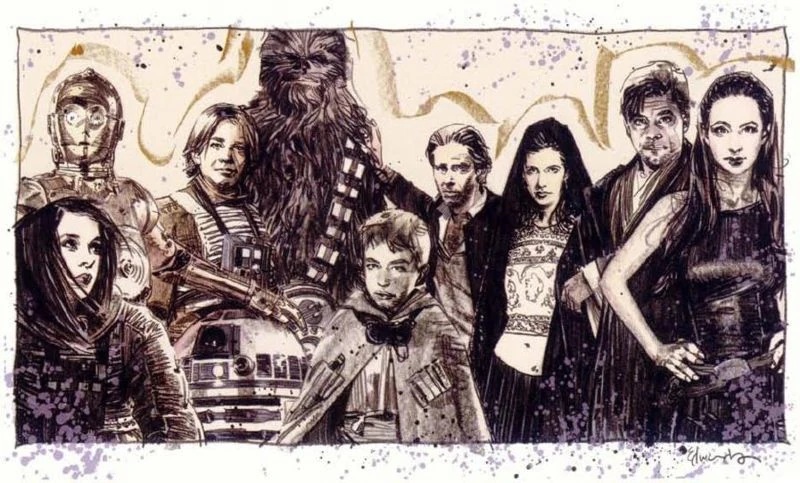

But come on. We all know that a lot more complicated than that.

No?

Does the phrase “Death Star Daycare” mean anything to you?

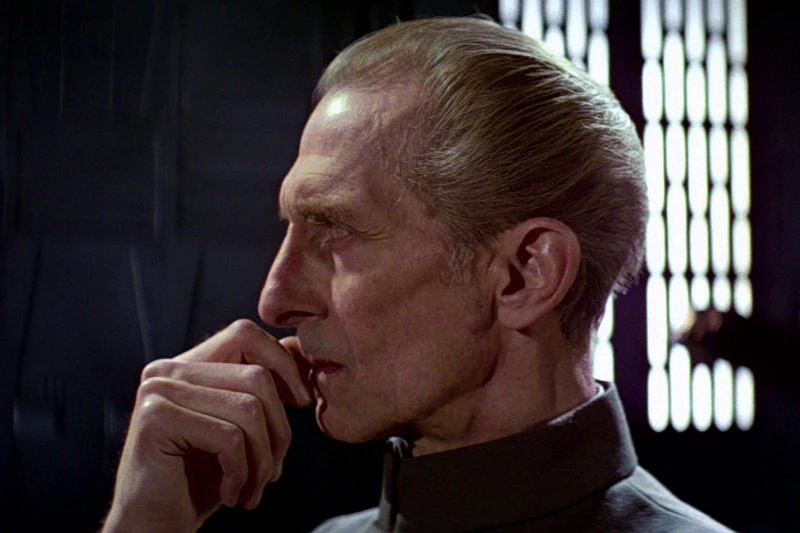
No, it’s not one of those quirky little comic strips in Star Wars Tales. It’s the observation that Grand Moff Tarkin’s technological terror is so darn big that it probably contains an awful lot of ordinary people in its massive crew. Military families. Imperial Army brats. Ordinary enlistees from the Mid Rim who just joined up to see the galaxy.

And Luke Skywalker blew them all up.
Read More

Star Wars and Generational Ethics: What is Owed to the Next Generation?

Sparked by the A Case for Starting Over, Part V: Passing The Torch piece….

A recurring line of political rhetoric over the last few years – and it is rhetoric, certainly not policy by any measure – has been around the idea that governments should not leave debts to future generations. In an ideal world that would be the case, but the world is not ideal and we have to deal with it as it is. That in turn means inheriting the debts of our predecessors regardless of whether it should be the case, some of the debt being the cost of the World Wars.

It might be said Star Wars is a case in point of one generation having to clean up the mess of its idiotic predecessors! Did Luke, Han or Leia wish for the galaxy to be ruled by a totalitarian Galactic Empire that sees the deployment of planet-killers as justifiable protest control measures? Of course not, but they’re stuck with it anyway.

Read More