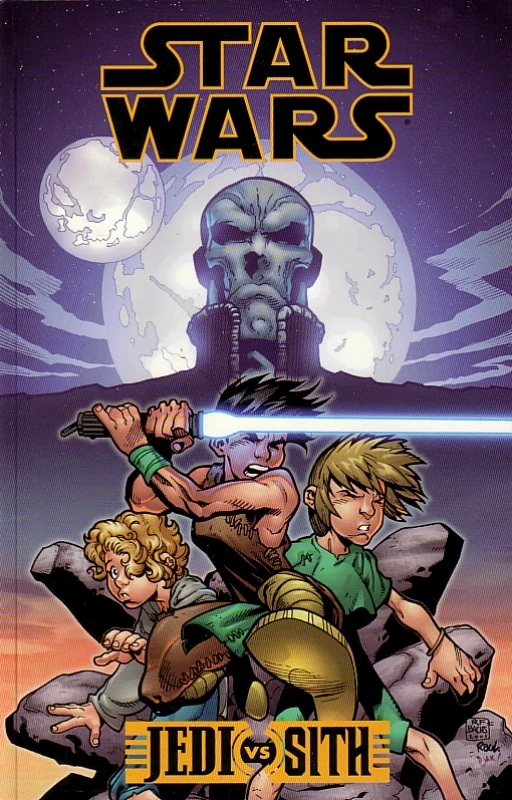
Top Shelf: Jedi vs. Sith

Jedi vs. Sith in trade paperback

Welcome to Top Shelf, a new recurring series I plan on running alongside Star Wars and Genre and my non-series pieces. The goal of Top Shelf is to curate the best of the Expanded Universe, the must-reads of the franchise.

New readers often approach the EU from the perspective of, “What are the main stories I have to read?” Given the way the EU builds upon itself in one ongoing story, it’s understandable to view things with an eye to the foundations on which the stories are built, the key points of the storyline. New-reader recommendations are often geared to the same purpose. I want instead to create a list of recommendations based on quality, answering the question, “What are the best stories?” This is a list that can appeal to new readers and EU veterans alike, as established readers may find that they’ve missed something that is “unimportant” but excellent. For those who know the stories already, Top Shelf can serve as an EU Hall of Fame recognizing favorites.

I want to start with the six-issue 2001 comic miniseries Jedi vs. Sith. Jedi vs. Sith is the story of the end of the New Sith Wars a thousand years before the films, in which the Sith were thought vanquished, but Darth Bane survived to refound the Sith in adherence to the Rule of Two. This is an “important” story, though somewhat obscure, but the galactic impact of the events isn’t what makes the story. Author Darko Macan, among the best writers to work in Star Wars comics, focuses on the experience of three children drafted into the war by the Jedi. Through their various journeys, Macan addresses what it means to be a Jedi, how one can fall to the dark side, and the cost of war.
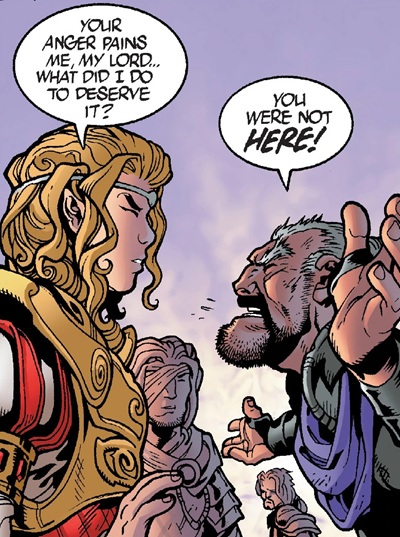
Lord Farfalla and Lord Hoth argue

The child protagonists don’t mean that the story is childish; rather, it is deeply adult, depicting the most horrifying turn to the dark side in the entire EU. It also dares to examine Jedi ideals. After a thousand years of unrelenting war against the Sith, the Order is in a perilous state, mired in a dark age as Jedi who have known only war succumb to weariness and disillusion. These Jedi are heroes, but exhausted by battle, disappointed that heroism isn’t a storybook affair, and flawed. Their leaders, Lord Hoth and Lord Farfalla, clash over philosophy. These Jedi are deeply human. As they continue to fight the Sith despite it all, we understand that true heroism is all the greater under such harsh conditions, carried out by fallible people.

This challenge to idealism resonates in the storylines of the children. One is angry, one idealistic, one naive. One, after much hardship, comes to understand the heroism of these grubby, worn-down Jedi. Two are infuriated by the shabby reality. Two join the Sith. One rejects both groups. One suffers heartbreak and loss. These children, initiated into the adult world of compromise, flaws, and complexity, bring that process of maturation into the open for the reader and call into question our relationship with heroic stories while ultimately affirming their values.
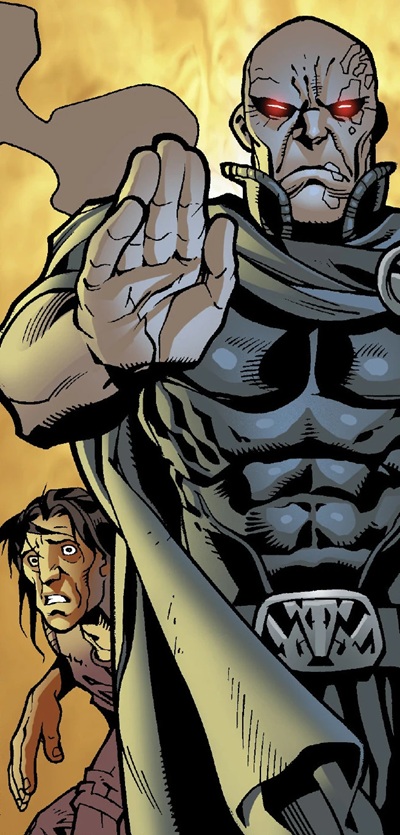
This Bane is scary

Meanwhile, the Sith are presented with the same eye toward philosophical complexity. These Sith, heavily rewritten by Darth Bane: Path of Destruction into a more generic and boring form, are here vibrant and interesting. Darth Bane is presented as a grizzled veteran, returning from a betrayal by his fellow Sith to find them led by the madman Kaan. As Bane struggles to find a way past the Sith pattern of backstabbing, attempting to unite ambitious and short-sighted squabblers against their Jedi enemy, he realizes the value of the Rule of Two: Sith competition harnessed by a structure that restrains and channels strife toward the betterment of the Sith Order. This Bane is imposing and terrifying, a religious zealot who believes in the power of the undiluted dark side and seeks to find a way toward Sith cooperation in its service. In the end, he takes an apprentice — from among the children. The moment is chilling, heartbreaking, and perfectly captured.

The art of Ramón Bachs has come in for some criticism due to some of the fanciful designs associated with the foppish Farfalla, but in truth it is also an important component of the story. Bachs’s designs convey the grit of the war-torn period without becoming grim or dreary; the art is stylized and pops with energy. Bachs also hits just the right note of medieval-inspired looks for the militarized Jedi Knights entrenched in a historical, semi-feudal dark age. He makes the period distinct and historical-feeling without going overboard.

Jedi vs. Sith is a thoughtful, mature comic with something to say about the nature of heroism and intelligent, unique portrayals of the Jedi and Sith. Its storytelling is masterful and gripping. The end result is a beautiful, haunting instance of real literature under the Star Wars brand, one of the best stories in the EU and one that definitely deserves its place here. If you haven’t read it, you’re doing yourself a disservice.
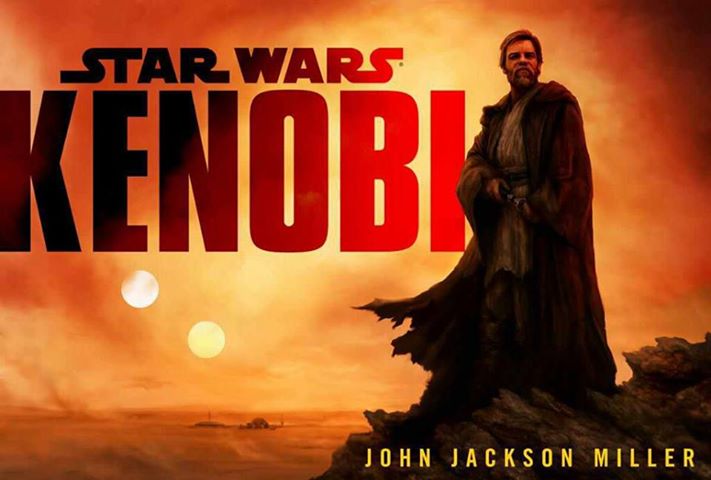
Kenobi: Roundtable Reactions

Before we get started, I want to note that there’s been a lot of great Kenobi-related content online this week—both fan-made and official. While it’s the goal of Eleven-ThirtyEight not to get bogged down in reporting every little thing, I do want to quickly shout out two awesome fan reviews—one by Bria at Tosche Station, and one by Megan at Knights’ Archive. Lastly, whether you plan on reading the book or not (though why the hell wouldn’t you?), do yourself a favor and head to EW.com to hear James Arnold Taylor, voice of Obi-Wan in The Clone Wars, read one of the book’s first-person segments in character. It’s magnificent. Anyway, ETE’s own Jay Shah and Lisa Schap received advance copies of Kenobi their own fine selves, so I thought it only appropriate to check in for their thoughts. Enjoy.

Mike: The thing that most stands out to me about Kenobi is that is might be the smallest-scale Star Wars novel ever. Not just in terms of the events of the book, but in terms of the perspectives presented, which are so tightly-focused that you don’t even know the gender of one of the major characters until halfway through. The best decision JJM made perspective-wise was to not actually tell any of the story from Obi-Wan’s point of view, instead only giving the occasional window into his mindset via his first-person attempts to commune with Qui-Gon. As for the plot itself, I feel like the whole thing could be boiled down to the word “parenting”, which is a pretty minor concern for a Star Wars book—no one is trying to take over Tatooine; no one even really cares about the Empire. Even the most outwardly antagonistic character, A’Yark, is also the one with the least power. They may be dangerous, but there is no threat whatsoever that her clan is going to wipe out the Pika Oasis. Thus, the book’s drama comes from how each of these people’s motives clash with the others’—and how even the slightest interference from Obi-Wan can totally alter that dynamic. Discuss.

Jay: The scale is small, but the ideas aren’t — and I think that’s a crucial element that Star Wars has been missing for a while. The post-NJO novels in particular have been stuck in this mindset that seems to think that a big conflict is required to discuss big issues, and that’s clearly not the case. The conflict in Kenobi is about as irrelevant as one gets on a galactic scale: we’re talking moisture farmers on a backwater dustball fighting with a group known pejoratively as either “sand people” or “raiders“. Heck, the farmers are living out in the boonies even by Tatooine standards: places like Bestine and Mos Eisley are referred to the way somebody out in the American west might have referred to glittering New York in the 19th century. Despite the technological advancement of the setting, there’s a clear sense of isolation and distance.

Read More

Star Wars and Genre: The Exploration Story

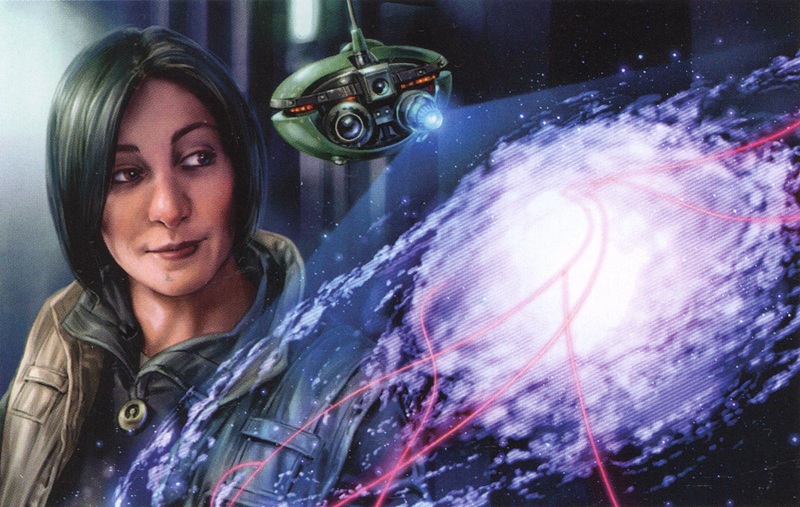
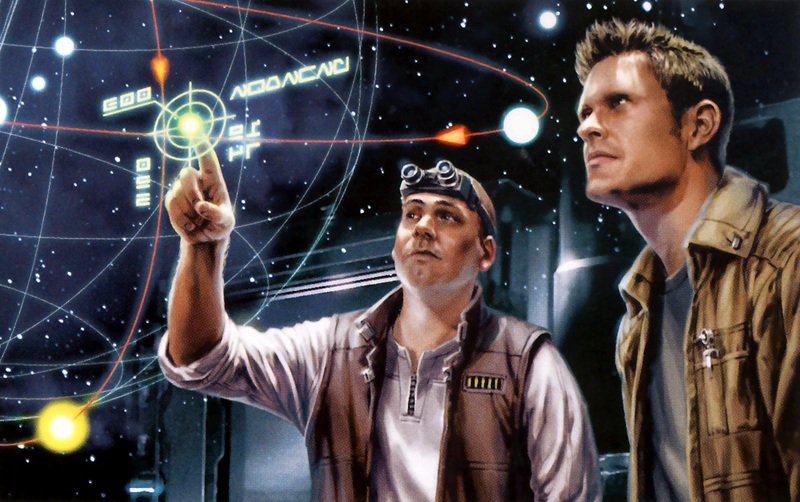
Space explorers from The Essential Atlas — who just so happen to be real life’s greatest Star Wars space explorers, Jason Fry and Daniel Wallace

Exploration stories are a staple subgenre of pulp adventure. These are tales centered on heroes who venture to strange, usually untamed lands and their encounters with nature and other peoples. The genre is characterized by the use of unknown or ancient civilizations and man-against-nature themes that lead to frequent use of natural threats like avalanches, quicksand, floods, sandstorms, and dangerous wildlife. Some stories, like H. Rider Haggard’s Allan Quatermain novels, feature intrepid explorers who make careers of penetrating the wild unknown. Others, like Robinson Crusoe, star ordinary individuals thrown into extraordinary circumstances. Some are active stories of expeditions for exploratory or scientific purposes (Journey to the Center of the Earth), sometimes emphasizing the discovery of lost civilizations (The Lost World), the exploration of ruins (At the Mountains of Madness), and/or treasure-hunting (The Mummy). Some follow the Robinson Crusoe pattern — the Robinsonade subgenre — of emphasizing the struggle for survival in and mastery of wild nature. The uniting element is the protagonist (or in the case of ensemble-focused stories like The Swiss Family Robinson or The Mysterious Island, protagonists) discovering something or encountering the unknown in a foreign environment.

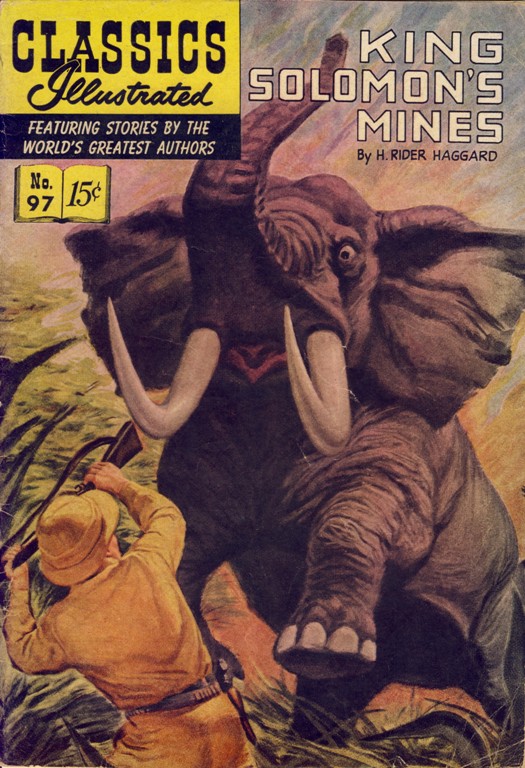
Don’t judge a book by its cover — unless it has a rampaging elephant on it, in which case, pick that shit up. You just got promised ADVENTURE.

The genre became most prominent in the Victorian era, when Europeans were spreading across the globe, discovering new (to them) civilizations, ruins, lands, and species. This colonial past has sparked some criticism of exploration stories as racist. They have tended to focus on white heroes expanding colonial influence, and both due to the racial attitudes of the time and the pulp imperatives toward action, often portrayed natives unflatteringly as dangerous savages whom the white hero must subdue or naive primitives whom the white man must lead and civilize. Even a modern exploration story that avoids the colonial narrative, Indiana Jones and the Temple of Doom, comes in for accusations of racism due to its use of a native cult as antagonists. Many modern takes on the exploration genre continue to be produced, however, and are particularly prominent in video games, with top titles like Uncharted, Tomb Raider, and BioShock fitting into the genre.

Science fiction settings, however, have been able to provide a somewhat safer venue to use the exciting action tropes of the genre with less real-world baggage. Space adventures to uncharted planets are common to pulp science fiction, and Star Trek is practically built on the exploration story. It is less known due to the relative obscurity of the material, but exploration stories are well-represented within the Star Wars Expanded Universe, too.

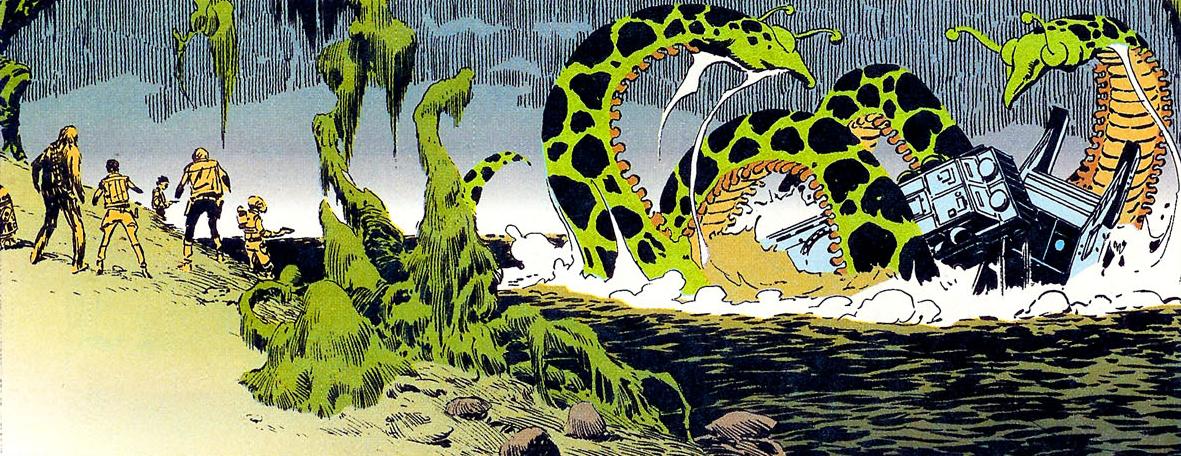
Early EU featured a lot of crashes on untamed worlds. This sort of thing was the result.

The first EU novel, Splinter of the Mind’s Eye, featured Luke and Leia crashing on a swamp world with a single colonial mining outpost. Stranded, they journeyed across and even underneath its surface, facing Imperial authorities, deadly terrain, spectacular wildlife, and tribal natives in a quest for a gem hidden in an ancient temple. Setpieces featured a giant mud-burrowing worm attack, a journey across an underground lake, and a cave-dwelling civilization of aliens — it was pure exploration pulp. Other early EU was replete with similar stories. Our heroes frequently crash-landed on strange worlds throughout the various seventies and eighties comics, or found themselves exploring remote planets in search of new bases or allies. They found a supercomputer protecting the ruins of a lost civilization, a smuggler hideout, a magical siren, and a monster guarding an ancient city. Han Solo and the Lost Legacy featured Han and Chewie’s quest for the lost treasure of Xim the Despot on a backwater world that featured water monster fights, a lost cult, and ancient vaults. The Lando Calrissian Adventures, oddly so given Lando’s profile, focused on Lando as an adventurer pulled into exploration, discovering the secrets of an ancient civilization within their bizarre ruins in Lando Calrissian and the Mindharp of Sharu and protecting a newly-discovered species of spacegoing manta rays from exploitation in Lando Calrissian and the Starcave of ThonBoka.

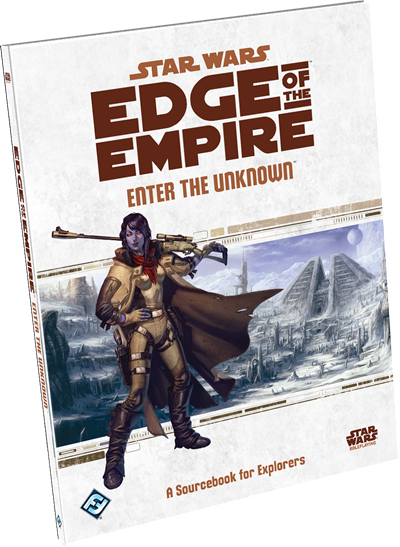
The RPGs have also tended to be good about including exploration elements

The concentration on exploration stories has declined since those early days, but they have not died out entirely. Lando again got an exploration plot in The Black Fleet Crisis, examining a starship that served as an artifact of an extinct species. The Hand of Thrawn Duology sent Luke and Mara into the Unknown Regions to explore Thrawn’s secret fortress, and they returned there for an expedition into the wreckage of Outbound Flight in Survivor’s Quest. Han, Leia, and a Murderer’s Row of supporting characters ventured into strange new ruins within Kessel in my favorite subplot of Fate of the Jedi: Outcast. Empire sent the Rebel heroes to wilderness planets a few times, and added the castaway clone Abel to the cast. John Jackson Miller’s Lost Tribe of the Sith short stories and comic have fruitfully explored the concept of a castaway group mastering and exploring its new, isolated home. Lesser elements from the genre can be found in the treasure hunt for the Katana fleet, Luke and Mara’s trek across Myrkr, Han’s sojourn into Kessel’s mysterious spice mines during his imprisonment there, and the need to find and understand the ancient repulsor technology of The Corellian Trilogy, among many examples. The exploration element definitely has not disappeared from the franchise’s radar.

The mysterious planet Lehon, from Knights of the Old Republic

It could be better exploited, however. Most of the stories have had their exploration elements as one subplot of galactic-scale tales, limiting their page time and thus the ability to get into the meat of the genre. Knights of the Old Republic used a classic exploration hook, the archaeological quest, as the basis of its story framework but buried the concept under a focus on yet another galactic clash and role-playing game mechanics. It was a notionally exploratory story that wasn’t really about the exploration. The days of stories built around uncharted planets and quests for ancient treasures are mostly in the past. Yet now, they would make a better change of pace than ever.

The incredible difficulty of challenging a fully-powered Luke Skywalker has helped drive the tendency toward overpowered villains in epic galactic conflicts. Yet why not challenge Luke with something that couldn’t simply be solved with a lightsaber: a crash-landing on a remote world filled with hostile flora and fauna? Surviving in the wilderness without supplies, battling predators, rockslides, poisonous plants, sandstorms, and floods would provide a legitimate challenge that doesn’t require yet another galaxy-distorting megathreat, and would be fresh and unique to boot.

Xenoarchaeologist Corellia Antilles

That’s not the only application; there are several established facets of the universe that would readily lend themselves to exploration stories if they were only exploited. Jag Fel has an established period as a castaway that could make for a neat survival novel. The Unknown Regions and their many dangers were introduced long ago, dangling the prospect of their future exploration; that promise has yet to be directly taken up by a story built around Unknown Regions exploration. We know that trailblazing explorers were key to galactic expansion throughout the Republic’s long history, but have no real stories built around that aspect of history, other than the use of the Daragons to spark the galactic-war storyline of the Great Hyperspace War. Star Wars already has its answer to Indiana Jones, Corellia Antilles, and her archaeological expeditions could be a perfect hook for classic exploration adventures and a potential window into galactic history. The role-playing game material has made much of the existence of scouts, figures who explore the galaxy and trek across harsh terrain for all kinds of purposes, hailing from the fringe or the government. Their nomadic existence, adventuresome work, and obvious utility to storytelling would seem to make them naturals for inclusion in Star Wars stories, but we have yet to see much of them — one reason I was so disappointed to see Dathomir outback scout Dyon Stadd killed off in Fate of the Jedi rather than made a regular part of the cast.

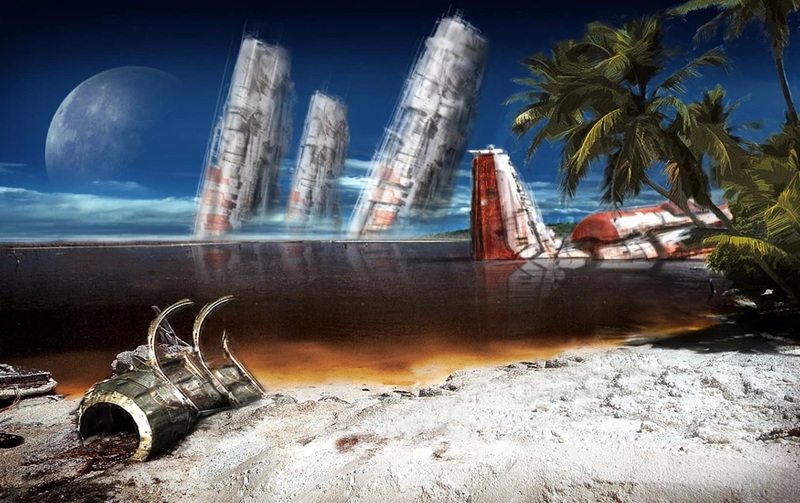
That’s what I’m talking about

Exploration is an important part of Star Wars’ history, both in- and out-of-universe. It is not only an integral part of Star Wars’ fabric, but a fantastic element to add a change of pace to EU storytelling. In its emphasis on themes of encounter with and discovery of the unknown, it complements central Star Wars themes of encounter with the mystic, knowledge, and self-discovery. The exploration story deserves the attention and consideration of Star Wars creators.

NJO Aftermath: The End of the Vong – Why?

I am the least likely person to write an article like this.  Why? The Yuzzhan Vong were the villains of the New Jedi Order series and, to put it mildly, I’m not a fan.  Oh, it has its moments, it has its high points and those it does very well, but it’s still nowhere near enough to move me to the “fan” column.  So why on earth write it?  Because of what happened after New Jedi Order….
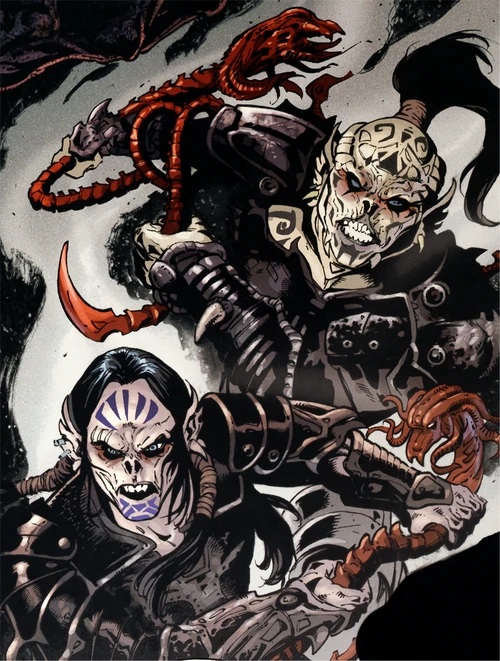
New Jedi Order concluded with The Unifying Force in November 2003, one of the major things that did was draw a distinction in the Vong.  On the one hand there were the psychopathic, sadomasochistic evangelical Warrior Vong and then there were the Shamed Ones.  These Vong were the ones the biotechnological implants and enhancements used by warrior and scientist Vong did not work on, thus they were despised and deemed only fit for slavery.  The Unifying Force also posited that it was being cut off from the Force that so warped the Vong on a collective level, so that connection is restored.  To some, this is then the redemption of the Vong, but for me, it’s rather instead merely opening the door to it for them.

Jump forward to 2006 and Dark Horse Comics announces, to much controversy, it’s Star Wars: Legacy title, which will be set just over a century after The Unifying Force.  In the history created for the story, the Vong, having come to understand how their predecessors caused so much devastation and death, offer to heal the worlds afflicted.  It is an offering of atonement that the Sith take advantage of to ignite a galactic conflict.  They are able to do this because both the Jedi and the Galactic Alliance vouch for the Vong’s offering and are blamed along with them when things go wrong.

This is, quite simply, a masterstroke.  We go from the Vong having the door opened to redemption and atonement, to them understanding why they should seek it and then offering something they think will get them closer to it!  It would have taken a great deal of time to deconstruct the Vong’s old outlook and perspective.  It would have taken time for them to adjust to the notion of freedom and understand the moral responsibilities that come with it.  And, once that is adjusted to and understood, the legacy of their predecessors can be faced….Star Wars: Legacy posits that it all took a few decades to do, which is very plausible indeed.

So we have the Vong becoming far more than they ever were previously.  We have the Jedi backing their offering, which aligns well with the Jedi belief in atonement and redemption for previous failings.  We have a government that supports the Jedi in this – given the direction taken in recent years in the late post-Episode VI Expanded Universe, this now looks utterly revolutionary!  And they all pay a heavy price indeed, as a vengeful galaxy, manipulated by the Sith, give into their inner demons rather than their angels.
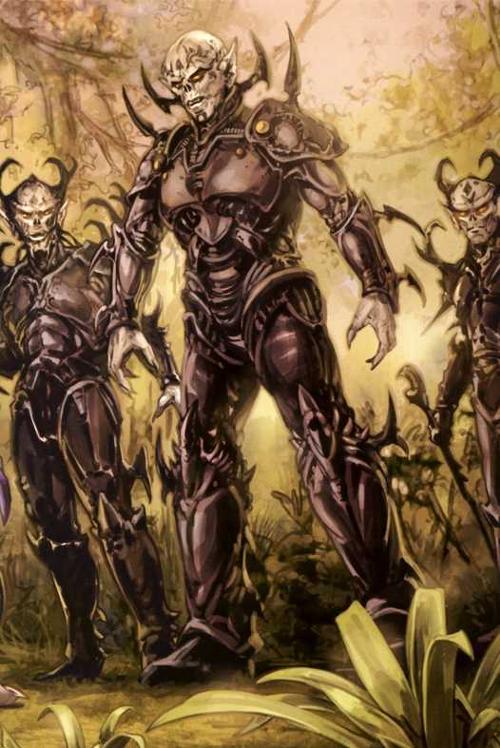
Jump forward to 2009 and Star Wars: Invasion is announced.  Though this series met with a mixed reception, one thing that was generally agreed on was that having visuals for the Vong was very good.  One of the weaknesses in the series was a difficulty in envisaging Vong tech, so having some visual versions of that gave the core series a boost.

Jump forward to 2012 and Star Wars: X-Wing: Mercy Kill was published.  This did two unexpected things with the Vong – it had one as a member of the Wraiths unit, used on covert ops, which in turn permitted use of Vong biotechnology.  Second, it had flashback chapters to an operation one of the characters ran during the invasion.  And those sections were utterly superb.

I have yet to understand why, having stubbornly stuck to their guns over New Jedi Order, having stuck with it across 5 years and nearly 20 books, Del Rey then went: Hey, you know what? No one wants the Vong so let’s get rid of them!  This seems blind to where they ended up.  Did people want more of the psychopathic, sadomasochistic evangelical Vong? No, I’m quite certain that was not wanted but was that all they were by the end of the story? Also no!  And all those fascinating potential possibilities were simply shut down!  It took a comic series to do what Del Rey shrank from doing – reviving the Vong but in new and very different form, yet built on what came before.

By 2009, there was some interest in a return to the mad, bad Vong – which is why there was so much interest in Invasion when it was announced.  X-Wing: Mercy Kill followed in its footsteps.  But didn’t people hate the Vong?  While the New Jedi Order was in flow and the final outcome unknown, that was certainly the case, but now?  Now the story is done and the overall shape known for over a decade, it will obviously be seen differently.  Certainly, for me, the flashbacks made the case for, at the very least, a Tales of the NJO anthology.  Unfortunately, these are no longer done either – though the Lost Tribe of the Sith Omnibus is a rare exception.
For all that Star Wars sells itself as a story of redemption, with Anakin Skywalker finally coming good and killing the Emperor – though, for me, he took his time as Luke was being done extra crispy – it is rarely interested in how redemption or atonement may be done.  It’s as if there is a preference to simply move a being or indeed an entire species from the “Bad” to the “Good” column and think no more on it.  For me this is a profound mistake and an utterly wrong direction.  Having opened the door to the Vong’s rehabilitation, I want to see more of that process and follow it through to the end.  What end might that be? Ultimately it would be the Vong, as members of the Galactic Alliance, accepted by the galaxy that once reviled them, in part due to their healing numerous worlds successfully and sought no reward for doing so.  It is, all in all, probably unlikely, but maybe the recent Legacy Volume II will be radical enough to attempt it, if it but has the time afforded it to do so…..

Kenobi Review: The Smaller The Pond, The Bigger The Ripples

—–WARNING, MILD SPOILERS AHEAD—–

“Well, if there’s a bright center to the universe, you’re on the planet that it’s farthest from.” – Luke Skywalker

Kenobi opens onto a galaxy that has been ravaged by three years of open civil war. Countless planets lie in ruin, and countless rim populations are warily, often forcefully, being brought back under the “protection” of the Old Republic, which is suddenly calling itself an Empire.

But as it happens, Kenobi opens on Tatooine. And Tatooine doesn’t give a shit.

Tatooine’s human population, the book is careful to point out, are settlers, nothing more—even those who’ve been there for generations. Kenobi‘s main human characters are Orrin Gault and Annileen Calwell (whose nickname, brilliantly, is “Annie”), two people who, while they’ve done pretty well considering the circumstances, would describe themselves as barely keeping their heads above water…so to speak. Life on Tatooine is a constant battle—against the elements, against destitution, and against the natives.

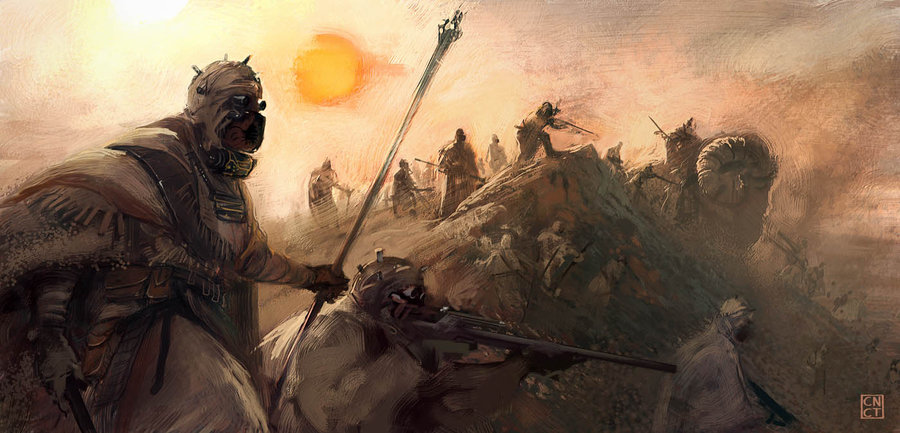
Which brings me to the third main character—the Tusken clan leader A’Yark. While Orrin and Annileen practically leap off the page from the get-go and easily overcome my reflexive aversion to excessive human characters, A’Yark is hands-down the most interesting thing about this novel, and every moment in the character’s head is a window to a new world. John Jackson Miller does a great job of incorporating all the existing bits of Tusken lore while creating a unique clan that’s not quite like any we’ve seen before—and in particular, one that’s unique to this point in time. Anakin’s slaughter of the Tusken camp in Attack of the Clones still weighs heavily on the Tuskens’ consciousness, but isn’t dwelled on excessively, or made into a giant plot point (nor, incidentally, are the Larses), because while A’Yark’s clan is shaped in a huge way by that event, this story isn’t about that.

This story also, by the way, isn’t about Obi-Wan. Obi-Wan is a giant stone thrown into the shallow pond that is the Pika Oasis, the community around which the book takes place, but Kenobi is very much the pond’s story. A rippling pond is still just a pond, however, and that brings me to the most important thing I have to say about Kenobi—this may be the smallest-scale Star Wars novel ever.

I knew right away that that would be the main point of this review, but in the month or so since I finished the book, what’s struck me is that it’s more true the more I think about it. There is no bad guy in Kenobi, no evil plot to foil. A’Yark is the most antagonistic, Annileen is the most sympathetic, and Orrin is, well, Orrin—but the story of Kenobi is the story of three people in a mess, and the stakes here are nonexistent beyond the lives of these three people and those they love.

What makes it work, simply, is that Miller creates excellent characters that you can identify with, and whose fates come to matter to you, despite the fact that a Star Destroyer could crash into the Pika Oasis and nothing in any other part of continuity would ever notice. Kenobi is the rare Star Wars novel that, in addition to telling its story, is about something—responsibility. Kenobi‘s three-people-in-a-mess, not coincidentally, are all parents, and when you dig down a little you realize that the book isn’t even about their needs and desires, it’s about how each of them chooses to handle that responsibility. Each has children with different needs and desires of their own, and each is a case study in a different style of parenting.

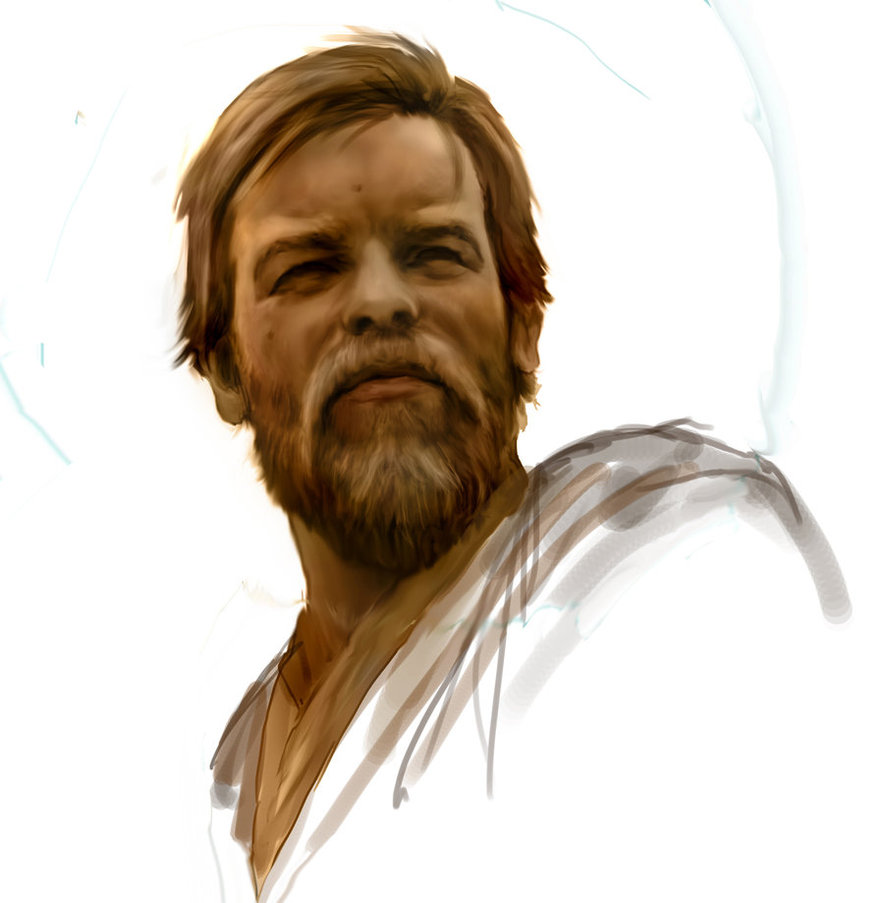
Which brings me to Obi-Wan. Like the others, he now finds himself responsible for a child who needs him, even if that child doesn’t, or can’t, realize it. The struggles of the other characters so perfectly reflect Obi’s internal struggle at this moment that the entire book stops just shy of being a great big shadow play inside his mind—do I take a heavy hand, or keep my distance? Would I be a good influence or a bad influence? And what about what I want? What about my own legacy? All this is no doubt playing below the surface of his mind at the same time that it’s happening in three dimensions all around him.

Meanwhile, back on the surface, all Obi-Wan really wants right now is to be alone—to work on communing with Qui-Gon Jinn, and to keep from attracting Owen Lars’ ire. But even this far away from the bright center of the universe (or, in fact, because he’s this far from it), everybody is connected to something. Miller has gone on record about Kenobi, like Knight Errant before it, being an outlet for his own ruminations on what it means to be a Jedi when one is alone, with no support structure, and only the scarcest of mandates. Here Obi-Wan is far more alone than Kerra Holt ever was, and Miller’s answer seems to be that no one is ever truly alone. Everybody makes ripples, even in the smallest pond.

*   *   *

I’m going to be talking more in the near future about how books like Kenobi could factor into the Disney-era Expanded Universe (and join me again this Friday for a Kenobi group discussion with Lisa Schap and Jay Shah), but for now, suffice it to say that more stories like this, told by authors of Miller’s skill, are a win-win situation. Kenobi comes out today with my highest possible recommendation.

One last thing I want to address—I haven’t spoiled much of the story here, not for philosophical reasons, but because the mechanics of the plot are beside the point. I have taken care to avoid one or two big surprises because they make the novel more fun and mean nothing out of context, but there is one thing I think it would be helpful to address. A’Sharad Hett, ex-Tusken Jedi Knight, does not appear in Kenobi. His story, however, is very important to the book; like with Anakin’s Tusken slaughter, Miller’s genius is to factor existing material into the story in a natural way, without making it feel like he’s checking a continuity box. And having said that, there’s another cameo that is both awesome for EU fans and makes complete sense in context—but I’m not gonna be the one to spoil it.

(Thanks to NetGalley and Del Rey for providing Eleven-ThirtyEight with advance digital copies of this book)