Firing the Canon: It’s the Caliber that Matters

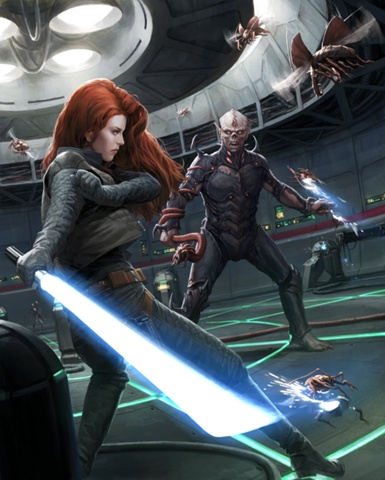
Ever played a Star Wars video game and wondered how much of it was a “real” part of the Star Wars universe? Ever picked up a lunch box or a coloring book and thought to yourself whether or not this was part of the Star Wars mythos? For most people it’s unlikely, although for readers of this blog it’s a distinct possibility. Today we examine whether most everything with a Star Wars label on it should be part of the Star Wars continuity – or canon – or whether some products should exist just for the sake of fun and enjoyment, without complicating things unduly.

At the start, we’ll note that we’re not arguing for film purism. We’re not even arguing for snobbery that suggests a certain time period of Expanded Universe products was written better than others, which should be written out of the universe. In fact: we submit that the widely varied, inclusive, and richly textured Star Wars canon is what gives the Star Wars universe its scale, life, and energy. Instead, we want to focus our analysis on two specific recent Star Wars endeavors: The Force Unleashed video game and the Star Tours: The Adventures Continue attraction at the Disney theme parks. The question is: should these be an official part of the Star Wars canon, or can a ride be a ride and a game be a game sometimes?

**********Needless to say, this essay will contain spoilers for both the video game and the amusement park attraction**************

Canon – why all the sound and fury?

Canon – the term is redolent of literary and religious prestige. The canon, according to the Greeks and the Romans, was the body of literary work that was held in the highest esteem by the great and the learned: what we might today call classics or great works. To religious authorities, the canon is the list of books that can be deemed authoritative within religious dogma, and canon law is therefore the law set down by the Church since late antiquity. Both definitions derive from the original Greek word κανων, which was basically their word for a “yardstick” – later, a standard by which to judge other things.

Fictional franchises, including Star Wars, have adapted this usage: a canon work is a work within a franchise that is part of the official storyline. It is often distinguished from apocrypha – another term with religious roots – which refers to works which may share the same fictitious universe, but are not part of the official storyline or world that the creators have constructed. For the longest time, Star Wars fans debated whether anything that wasn’t a Star Wars film could ever be part of the authentic, canonical Star Wars saga.  Debate raged on among the fans, who clung to off-hand remarks and scattered quotes from George Lucas and Lucasfilm representatives over the difference between “canonical” and “licensed,” “official” or “alternate universe.” Eventually Lucasfilm Licensing settled the issue, creating a tiered system for canon. The system, as it stands today, refers to the highest level of filmic canon as G-canon, The Clone Wars television show as T-canon, the Expanded Universe of books, guides, and games as C-canon, obscure and sometimes contradictory material that might gain canon status by reference in other works as S-canon, and works that aren’t canon at all are called N-canon (or by a prior name, Infinities).

So why this complex scheme? Well, it’s a concession to the idea that the Lucas-created world has primacy and that spin-off materials might sometimes conflict with it (though usually it’s the other way around, such as when the Prequel films contradicted some of the material established in the older EU). This canonical hierarchy resolved the problem by declaring that EU materials would be displaced by television or filmic materials, although continuity-minded folk will tell you that a hierarchy only solves part of the problem: trying to reduce the damage to the EU continuity by mitigating and massaging potential conflicts through retroactive continuity adjustments is an on-going process.

Moreover, the canon hierarchy does not really solve the problem of conflicts within the Expanded Universe C-canon category. The general rule of thumb is that almost everything is C-canon unless stated otherwise as a higher level of canon, and more recent C-canon sources trump older ones. Here’s where the problem arises. We could have an entire discussion on whether it’s a bad idea to have the most recent source trump older ones, especially as a strict chronological assessment takes no account of quality. But today, we’ll be focusing on the all-inclusive nature of C-canon instead.

The Force Unleashed

The Force Unleashed – hereinafter “TFU” – was a video game with an accompanying multimedia blitz of books, action figures, and RPG materials that resembled the great Shadows of the Empire (“SotE”) project of the late 90s. However, as far as continuity goes, the similarity ends there: where SotE carefully made use of existing continuity to expand and develop the universe, TFU ran roughshod over existing continuity and failed to make a good accounting of itself.

Let’s be specific: we’re talking about two issues. First is the over-powered nature of the main character, and second is the way that TFU changes the story about how the Rebellion was founded.

The main character in TFU is capable of astonishing feats of the Force, as per the game’s title and premise: to showcase Force usage beyond any limits we had previously conceived or witnessed. Consequently, Starkiller can not only blow his enemies away with gale-level Force bursts, crumple reinforced bulkheads as if they were tin soda cans, or wield enough lightning to embarrass both Thor and Zeus, Starkiller can also pull an Imperial Star Destroyer out of the sky while destroying its TIE Fighter escorts – all on his own! Oh, and he can outfight Darth Vader. No big deal.

Additionally, Starkiller – once Lord Vader’s secret apprentice – redeems himself and becomes a good guy because it’s thoroughly necessary for every Star Wars work to completely undermine the mythic saga of Vader’s redemption… whatever! As part of his redemption story, Starkiller inspires Bail Organa to formalize his opposition to the Empire and arranges for him to set up meetings with key resistance leaders to create a movement that will be known as the Rebel Alliance. Now, to the game’s credit, the story does make use of existing continuity on the Rebellion’s foundation by involving three Old Republic Senators – Bail Organa, Mon Mothma, and Garm bel Iblis, but it places Starkiller in the central role. Worse yet, it turns the signing of the Declaration of Rebellion into an Imperial ambush, after which none other than the Galactic Emperor himself – on board the Death Star! – personally beholds the new Rebel leaders. Why is this problematic? Because Bail Organa in particular continued to serve in the Senate, and because the EU had long since established that he was a secret backer of the Rebellion within the Imperial Senate, as contrasted with the rather public retirements of Mothma and bel Iblis.

This is not only an EU problem: it stretches credulity for Princess Leia Organa to be Alderaan’s senator, and shielded by diplomatic immunity if her father is a known traitor. Why did Lord Vader need a pretext to arrest her? Why was her father free to operate as he saw fit?

One last insult to injury: Starkiller’s family crest became the symbol of the Rebel Alliance. Might as well go all the way, we suppose.

There’s an easy solution to all of this: TFU is just a game. Treat it as such. Now, we can hear the cries of all the EU completionists already: they’ll point out that games are a valuable part of the EU canon and have made a lot of important contributions, in terms of storyline, ideas, and even integration of existing continuity. This is all true, and we do not argue that video games are intrinsically non-canon. Yet when the logic of a video game requires immense suspension of disbelief – such as when Empire at War had us believe that Princess Leia’s corvette at the beginning of A New Hope was escorted by a Rebel fleet as it fought with Lord Vader’s Star Destroyer (making one wonder if she thought Lord Vader was mentally compromised to believe her protestations of diplomatic innocence) – one should just say a game is a game.

The premise of TFU was to break boundaries and astonish the audience. It succeeded. But its very goal demands that it just be treated as an imaginative exercise rather than an existing and functional part of the Expanded Universe.

Star Tours: The Adventures Continue

In 1987, George Lucas and Industrial Light & Magic dusted off their old Star Wars models and created the first live-action Star Wars film experience since Return of the Jedi. It was an astonishing feat and it echoes all the rollicking good fun and excitement of the original Star Wars films. It remains this author’s favorite theme park attraction.

Yet the attraction – a short film projected onto a motion simulated space transport – had some continuity wrinkles too. Ostensibly, the Star Tours company operated Starspeeder 3000 transports – providing an amusing Star Wars-ified view of air travel, but in space, complete with airport humor – on tours to familiar locales from the original Star Wars films. The attraction itself featured the “Endor Express,” but the riders never arrive at the planet, instead experiencing a wild ride through ice comets, a close call with an Imperial Star Destroyer, a dog-fight among X-wings and TIE Fighters, and finally an honest-to-goodness Death Star trench run. But wait – which Death Star was this? It had a trench, but it’s at Endor – but it’s fully complete, too! Lucasfilm employees and Star Wars writers have as much fondness of the ride as this author does, so they took great pleasure in referring to a hypothetical Death Star III, effectively treating the ride as canon. Yet there was no pressing need for the ride to be C-canon: an author could express their fondess for the ride by referring to specific aspects of it, such as when Timothy Zahn referred to the “Starspeeder 3000” craft in his Thrawn trilogy of books in the early 90s. The ride could have been S-canon!

Star Tours was recently redone with modern simulators and a 3D, HD video track. Since the ride eventually became “stale” among park attendees over a period of two decades, the new version of the ride featured several alternate scenarios: the odds of any two ride experience being the same were now much smaller. The potential sequences span different worlds, from arboreal Kashyyyk to urban Coruscant. Though the ride is notionally a prequel to the original Star Tours – featuring Starspeeder 1000s – and consequently set between Revenge of the Sith and A New Hope (confirmed by video displays inside the ride waiting area itself), the Coruscant sequence features scenes right out of Episode III’s opening battle while the Hoth sequence features an Imperial attack on a Rebel base complete with AT-AT walkers. Even the Naboo sequence features a Trade Federation attack on the planet, even though the Naboo pilots offer to lead the Starspeeder to the planet’s “Rebel base,” where the passengers are inducted into the Rebel Alliance.

EU continuity buffs enjoy challenges of this nature: they enjoy coming up with convoluted explanations, such as a Clone Wars reenactment above the Imperial capital, or a pirate attack on Naboo using captured Trade Federation ships (admittedly it was enjoyable coming up with those). The question is, though, aside from an intellectual exercise: what do these fixes accomplish? What benefit do they provide to the larger Star Wars universe? Can’t a ride just be a ride?

Recently, Star Wars writer James McFadden published a blog article on the official Star Wars website chronicling, in-universe, the two incarnations of the Star Tours ride. He very deliberately avoided answering the question of whether or not the new Star Tours ride was canon in every aspect, although he did reveal in comments on TheForce.Net’s Literature forum that he favors treating the ride variations as snapshots into different Starspeeder journeys taken by Rebel spies at different chronological periods of the Galactic Civil War. This solution is probably the best solution offered: although we still wonder if perhaps a fun ride or a fun video came can be just that, without requiring so much extra effort just to squeeze it into continuity.
“Humans ARE Superior!” Really?

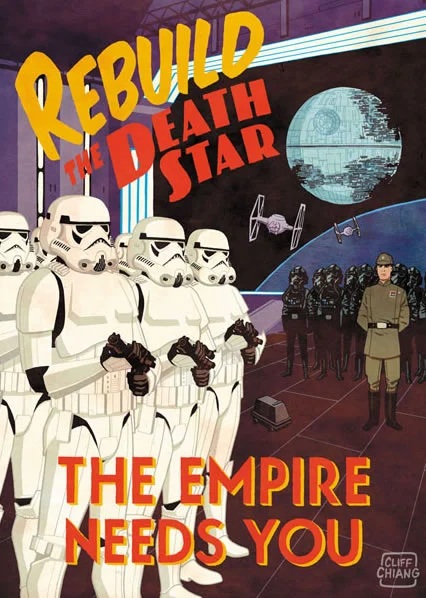
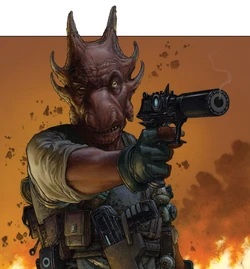
As far as Farscape, humans really were not superior! Not even close. For Star Wars?  It is considerably hazier but aliens do seem to fall into a number of frequent use categories or roles. Of course, if we go by Imperial propaganda, humans are superior but that was the Empire for you.

Single trait: this tends to crop up frequently, Hutts tend to gangsters, Twi’leks are frequently dodgy, Wookiees are heavy hitters that no one messes with. There are exceptions to this – Aayla Secura for instance for Twi’leks, the recent Dawn of the Jedi: Into The Void also gave us Tre Sana.

Less enlightened: step forward Borsk Fey’Lya and his successor, Pwoe. These two make the case for why aliens can’t run the galaxy – look what happened when they did! The galaxy conquered, Coruscant ravaged, trillions dead. More so than others, they also traded their alien status to gain power, Borsk never missed an opportunity to bring up what the Empire – and by extension – humans had done to the Bothans. Pwoe was inclined to similar gutter politics.

More enlightened: I’m hard pressed to think of many such characters, for all Yoda knows we see him take a serious loss in Revenge of the Sith.  There is the Caamasi character of Elegos Akla, who we see advising Corran Horn both in I, Jedi and the New Jedi Order.  However, the latter story kills him off, so Horn can no longer rely on his advice.

What of equals? There are a few, sure there’s Chewbacca, but he was so little used and deemed so uninteresting that a moon was dropped on him!  What of Gavrisom, who ran the Republic during the Hand of Thrawn books?  He gets frequently compared to Leia, so of course he’s going to lose, but he did just about keep the Republic together and was then never seen again.  Legacy gives us Gar Stazi, even Cade Skywalker could not disrespect this formidable Duros.  He tried certainly, but failed.

What I’m getting at here, for all that aliens feature, it tends to be humans that the galaxy revolves around.  To be fair, however, Star Wars is far from the only offender in this respect.  Star Trek commits the sin numerous times – Klingons, Ferengi, Cardassian, Andorian, Vulcan – they can’t get anywhere without humans.  Babylon 5? The Shadows and Vorlons had a nice once-a-millennium traditional punch-up going on and then those pesky humans poked their nose in and it all had to stop!

It could be asked, for the politics, why is there not an anti-Fey’lya type present? An alien politician who has succeeded not by taking the low road but the high? Would such a character be seen as a threat to Luke, Han and Leia’s moral authority? Even if there was, the accusation could still be made that for all their appearances, alien characters are simply partial reflections of human traits in external form. It’s difficult to refute this because, by its very nature, it is inevitable. The only response is to bring in aliens who are, in every sense, alien in their outlook but these tend to be exceedingly difficult to create. Even when they are set up, the resolution options tend to be separation or co-existence, with the latter being made possible through the identification of some common ground. So, not all that alien after all then.

Perhaps better to ask what characters there are that are deemed as equal to the lead human characters? In this respect, it seems the best examples in recent years can be found in comics. Knights of the Old Republic alone gives us two very well-realized characters in the form of Jarael and Gryph, the latter of which has his own fanbase!  Dark Times has Bomo and the crew of the Uhumele, all well-done characters.  In both cases we don’t see either Zayne Carrick or Jass Dennir attempting to steamroller them into submission, although it isn’t in their character to do so. Stazi, already mentioned, tends to take center stage in any story he’s in and then there’s Jedi Master K’Krukh…
Who has the status of controversy incarnate for some fans. Why? Because he legged it when Order 66 came down, hid out for a few decades, then returned to the revived Jedi Order and was feted as a wise senior Jedi! Nor is this restricted to K’Krukh, as a Neti character, T’ra Saa, also tends to get blasted for similar reasons. And they’re running the Jedi Order in Legacy, opting for a similar strategy to that used by Yoda and Obi-Wan, of waiting the Sith out until the right time. To be fair, the charge tends to be that they didn’t earn the leadership positions they occupy, but a counterpoint to this is that we do not know how they attained those positions.

And there is perhaps the crux of the matter: Should alien characters hold positions of power? About the only popular such character I can think of there is Admiral Ackbar – very popular creation in every respect. Others? There is, of course, Thrawn, until he became all heroic. (Or did he?) There is Saba Setayne, who is often seen as Denning’s pet character much in the way Thrawn is seen as Zahn’s. Surely there should be more? Perhaps this is something Episode VII will attempt to fix. Until then we’re stuck with the current flawed and very limited selection.

The Staff of Eleven-ThirtyEight Discusses Rebels

First, a little history. A long time ago on a website far, far away, I started a feature called EU Roundtable—wherein I would pick a few people from the Jedi Council Forums that I enjoyed talking to, and we would meet up in a chat room of some sort and discuss various Star Wars topics for eventual publication. Empire vs. Republic, Super Star Destroyer lengths, you know—simple stuff. In addition to being a rough prototype for this site in a way (ETE staff writer Jay was even a guest once), the goal of EU Roundtable was “to showcase the nitty-gritty of fandom – interesting, straightforward debates, typos and all”.

I was very happy with the way the roundtables turned out, by and large, but at the time I was beginning to drift away from my writing duties at TheForce.net, and ultimately the feature became a casualty of my waning devotion. While I would’ve loved to see someone else take over, alas, it was not to be, so I’ve decided to take the initiative of resuscitating the concept here at ETE—now known as Aggressive Negotiations, because let’s face it, “EU Roundtable” was hardly inspired. The goal of this first…volume? incident?…was partly to discuss the given topic, and partly so readers could get to know our staff’s individual voices (except for Ben, who is British and needed to sleep) in as raw a context as possible.

There is no spell-check here. No second drafts. And in my case, very little capitalization. What there is, on the other hand, is unapologetic adult language—so keep that in mind. As for the topic, well…

Final note: in honor of Rebels’ stated Ralph McQuarrie influence, I asked everybody to pick out a favorite McQuarrie image to include in this article. We’ll discuss our picks near the end. Enjoy!

Mike: Okay, first things first—obviously TCW was the show that launched a thousand discussion threads, but for better or worse…are we at peace with how it ended? Did it at least deserve another season to wrap up, or was cut-and-run as good an option as any? Read More

Escape Pod: Mara Jade Skywalker

I find myself surprised to be writing this article. Surely if I wanted one thing from the Expanded Universe to survive the anticipated Disney purge and make its way into the Sequel Trilogy that it would be my favorite character, Corran Horn, right? The more I thought about what to write as I sat down to write that article though, the more my appreciation for the character of Mara Jade kept pushing itself into my thoughts. So I’m writing to save Mara Jade instead.

This appreciation was completely unexpected, not only because I thought I was going to write about a different character but because I have never been a big Mara fan. Looking back I realize now that I should have been and I can’t even explain why I wasn’t a fan. She really embodied what I look for in strong female characters in the Star Wars books. I didn’t quite know what I had until she was no longer included in the stories.

Zahn’s Jade

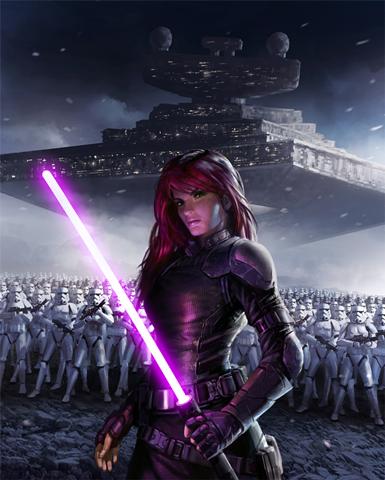
385px-Choices_of_One_PB_artThis Jade is perhaps the one I least like which is weird since he invented the character. Don’t get me wrong, I find the concept of her character to be enticing and I like how despite being the Emperor’s Hand she constantly makes decisions for herself and doesn’t feel like killing is always the answer to a problem. I think as a youngster reading the books I didn’t want to like her because she wanted to kill Luke and no one was taking my hero away from me! However, as an adult reading Zahn’s books now I find myself not liking the situations she’s written into. Zahn created this amazingly strong character and for the most part she is written into books where she can’t really win because Luke, Leia and Han are always in the way. By the time Choices of One came out I was really expecting or hoping to have a book with Mara Jade and without Luke, Han and Leia in it. I actually can’t figure out why all of her stories have to revolve around them. I believe she is a strong enough central character to the EU that she could hold a book by herself. I feel like we’ve never gotten to see her be the ultimate assassin/dark agent because the Big Three are always there to spoil things.

Now you might be thinking that during the timeframe that Zahn writes in Mara is the bad guy. Should the bad guy get to win? Answered simply, yes, if you consider her a true bad guy. I don’t. Time and again we’ve seen her administering Imperial Justice on people who actually deserve it for one reason or another. She’s not ruthlessly killing anyone she encounters and she usually tries to find out the truth before passing judgement. That’s part of what makes her character unique and intriguing to the reader. Therefore I don’t understand why we’ve never had a novel where we solely followed Mara Jade around. She’s the total package of a female character and could definitely hold down a book of her own. She is intelligent, independent and powerful which are all qualities I would like to see in the female Jedi that are included in the Sequel Trilogy. Why invent a new character when the perfect one already exists?

Bantam’s Mara Jade:

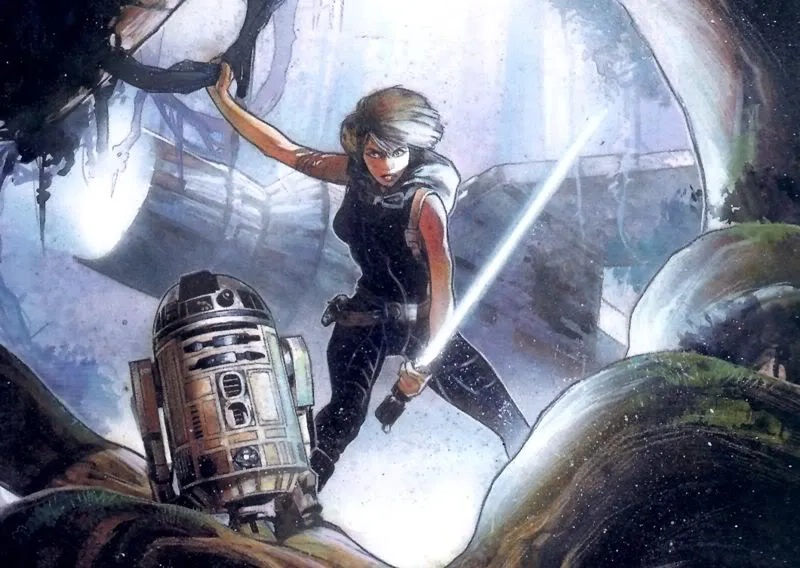
Jade survives the death of the Emperor and becomes successful in Talon Karrde’s organization. This version is definitely my favorite of the Jade character. I like how she decides to train as a Jedi only after a lot of thought and living of life. She continually tries to avoid the attraction to Skywalker and busies herself with the Smuggler’s Alliance and Lando. Her travels keep bringing them together and in a touching scene we finally get Luke admitting his love for her. She challenged him at every meeting and the Mara they developed became the best match for Luke.

385px-Maravsyomin

Del Rey’s Mara:

The only part I enjoyed of this version of Mara was her determination and strength shown on Dantooine during the NJO. Despite her sickness and hordes of Vong attacking them, she was able to stay alive long enough for backup to arrive. The ultimate motherly instinct and I applauded Del Rey for keeping her alive even after Ben was born because I seriously thought they were going to kill her off then. So often storytellers feel the hero needs to be motherless. When Anakin Solo died the readers shifted their focus to Ben and were hoping for great things from the offspring of Luke and Mara.

I am not going to get into the bad parts of the Del Rey Mara Jade and those are definitely something I don’t want to see saved from the purge. I’d also ask that any discussion doesn’t go into that either. I’m interested in having Disney preserve the character that is Mara Jade Skywalker and seeing her with Luke in the Sequel Trilogy (while also being a badass female Jedi too!).

480px-Mara_Jade_SWGTCG

Final Thoughts:

Mara Jade is the perfect match for Luke Skywalker. If they are going to have the story call for an offspring of Skywalker, and it seems logical that it would, I sincerely hope they include Mara as a female role model for the young Jedi in the series and as a wife and mother. Mara Jade has been a part of the Expanded Universe for a long time as a strong female character. I’m also slightly tired of heroes always having a missing or dead parent(s) in movies. So many of the recent sci-fi/fantasy stories seem to start with dead parents and I don’t think it is always necessary. I know some of this contradicts my thoughts on how Luke is going to die in Episode VII but I have been persuaded by some of the comments made on that article that the death of the mentor has been overdone. Star Wars also has a track record for having missing parents ie. Luke initially had no parents and Anakin’s father was unknown and then his mother was killed off in Episode II. If they can find a plausible way for Luke and Mara to remain together alive and on the sidelines I am all for them staying that way but I don’t want to see it at the expense of not fully developing the next generation of Jedi. Mara Jade is a great example of a female Jedi and I hope that they decide to include her in the Sequel Trilogy and other stories.

What Star Wars Can Learn From the Avatar Franchise

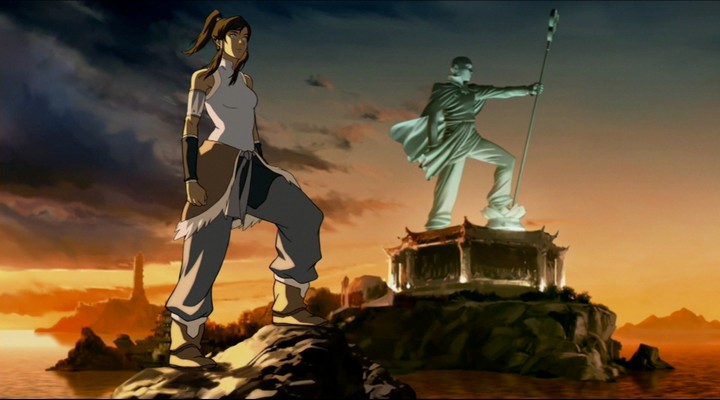
korraintro

C’mon—for a split second there, you thought I was gonna talk about the movie Avatar, didn’t you?

No, today is all about the other Avatar—the cartoon one, what with all the bending and such—and the lessons it could teach future (and current) Star Wars creators.

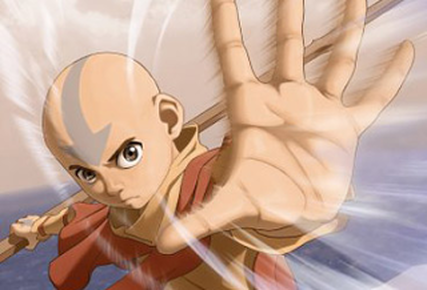
The Avatar franchise is primarily composed of two major Nickelodeon animated series—Avatar: The Last Airbender (henceforth ATLA) and The Legend of Korra (henceforth LoK). ATLA told the story of Aang, a long-forgotten magical totemic force who’s been frozen for one hundred years and wakes up to find the world he’s supposed to protect has moved on without him, and is now under the thumb of the expansionist Fire Nation.

“Magic” is a loose term here, because all supernatural abilities in this universe are rooted in one of four natural elements—earth, fire, water, and air. To “bend” an element is a learned skill rooted in one’s natural temperament, but each has been taken up as the banner of a different nation, and the practicing thereof has become strongly segregated. Once the Fire Nation has been, well, let’s just say dealt with, at the end of ATLA, LoK picks up years later, and tells the story of a new, and much different Avatar (the only being capable of mastering all four elements, who is eternally reincarnated much like the Dalai Lama) alongside the remnants of ATLA’s cast.

Of course, this Avatar spawned a movie, as well—but the less said about that, the better.

Lesson #1: White is not the default

When Lando Calrissian showed up in The Empire Strikes Back, people no doubt marveled at George Lucas’ bold storytelling choice—a black man, old friends with a white main character? And his race never even comes up? Such a thing was scarcely done in those days. Even still, if you go back and read the Marvel Star Wars comic series of the time, you’ll notice that while the authors just loved using Lando, very few of them bothered to make even one other human character, Rebel, Imperial, or scoundrel, a person of color. I mean, Lando was enough, right?

Things have certainly improved in the thirty years hence, but as followers of my ongoing diversity conversation at TheForce.net can tell you, not nearly as much as you’d think—for example, in the New Jedi Order novel series, a sprawling nineteen-book saga that rivals the Original Trilogy itself in scope, about one out of every three main characters is a straight, white, human man. And that’s in an entire galaxy of species!

Meanwhile, in Avatar, the presence of white people is so muted as to be entirely debatable. Aang himself can easily come across as white to the casual viewer, as can the bulk of the remaining airbenders we see (which, given the title, is not many). The same goes for members of the Fire Nation, including ATLA’s main antagonist Prince Zuko. Where this becomes tricky is in the two series’ heavily anime-inspired character design, and further, in their extremely Asian-inspired cultural design. I’m sure others could put this more elegantly than I can, but in the broadest possible strokes, airbenders are inspired by Tibetans, and firebenders are inspired by the Japanese—both groups whose skin tones could be mistaken for white in the absence of distinguishing features.
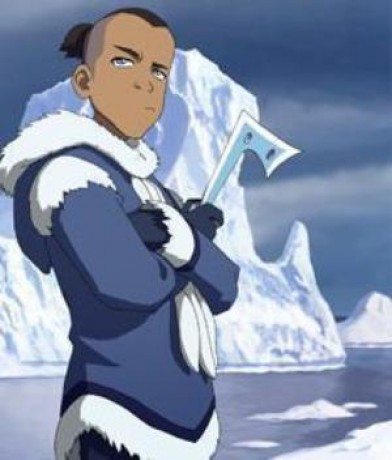
In any event, all this is to say that the extent to which the light-skinned characters are “white” or “Asian” is open to the interpretation of the viewer. And meanwhile, the Earth and Water Kingdoms are largely (though not exclusively) composed of darker-skinned characters—the former inspired by “mainland” Chinese heritage and the latter by the Inuit and Eskimo peoples. As such, there’s something for everybody; not only are people of almost all colors accounted for (though I have to admit, you’d be hard-pressed to find a character who could pass for, say, Nigerian), but the world of Avatar is distinctly everybody’s—since each nation is a hodgepodge culture to some extent, it’s impossible to graft any larger statements about one real-life nation or another onto the narrative, and best of all, several of the protagonists—notably water tribe members Katara and Sokka, and later Korra herself—are such an ambiguous shade of brown that pretty much any race could claim them if they really wanted to.

Other big Avatar fans might disagree with me on this, but I don’t think the strength of the franchise’s inclusivity is its overwhelming Asian-ness, but rather its overwhelming everything-ness.

Lesson #2: Everybody can contribute

Of course, just because one is born into, say, the Water Tribe, doesn’t mean they’re a waterbender. My personal favorite character in the entire franchise is Sokka, brother to waterbender Katara and practitioner of the ancient and deadly art of…boomerang.

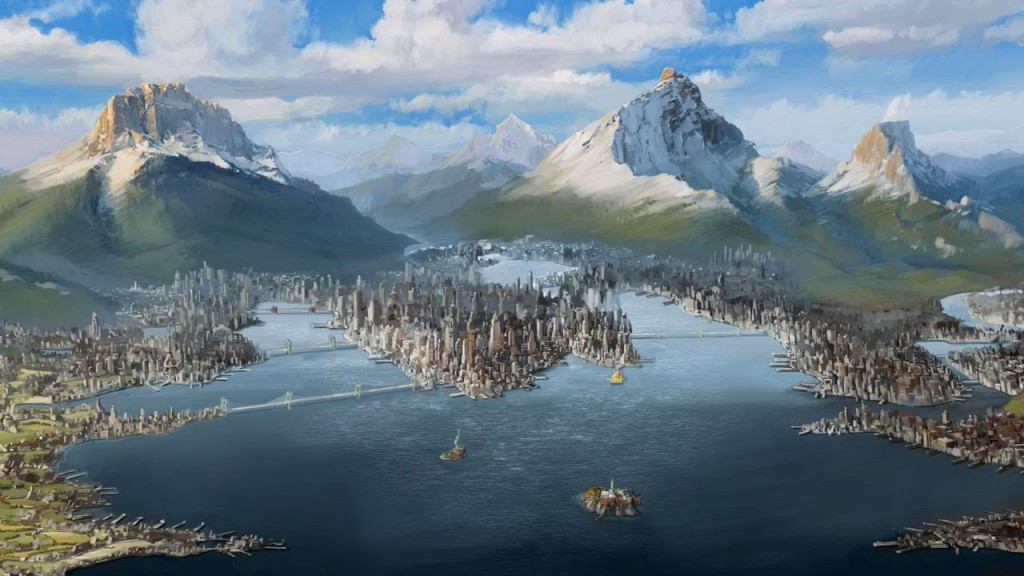
It’s never made totally clear why some people aren’t benders—this subject actually gets way more interesting in LoK, by which point the Fire and Earth Kingdoms have founded the wholly-integrated Republic City; where a firebender and an earthbender can and will have children of both types, or even nonbenders altogether.
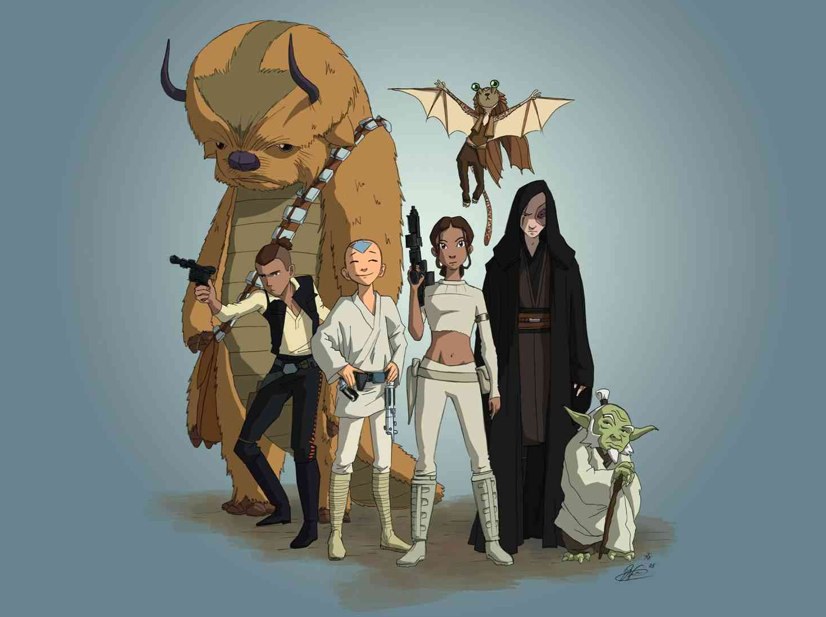
In Star Wars, two Jedi—or even one Jedi and a muggle—will almost always, like 98% of the time, give birth to Jedi children. Not only does this diminish the franchise’s “everybody can make a difference” message more and more with every birth, but it turns Force-users into some kind of bland, amorphous super-race.

Sokka, meanwhile, is with every breath the Han Solo of ATLA. No destiny is so epic, so spiritual relevation so profound, that Sokka won’t roll his eyes at it and wonder aloud when they’re getting something to eat.

But just like Han Solo, he’ll still buckle up in the end and launch himself into the cause of the week alongside his magical friends—and often he’ll even be the brains of the operation, as he’s only too happy to tell you. At first, LoK seemed poised to sidestep the nonbender type with its already-noteworthy introduction of Bolin and Mako, two brothers of two different bending types, but by the end of the first season they had given us Asami, Mako’s nonbending girlfriend, who held her own in battle thanks to another innovation of the LoK era—technological know-how.

Star Wars shouldn’t need to learn how to use the Han Solo character type; Star Wars invented it. But all too often—both in the prequels and in far more of the Expanded Universe than is excusable, it has proven itself willing to ignore the valuable lesson of the crafty smuggler.

Lesson #3: Don’t be afraid to move on

And speaking of Korra, if there’s one truly critical thing ATLA has over Star Wars, it’s that it knew when to quit. The original series knew the exact bounds of the story it wanted to tell from day one, and mercifully, the creators got the chance to complete that story without compromise or dilution. But once that story was over…the series ended.

And time passed.

And for a few years, there was nothing. But when ATLA’s popularity finally gave them a chance to continue the story, they didn’t give us a half-hearted Continuing Adventures of Aang and Friends—they jumped seventy years ahead.

republiccity

Given that the Avatar, the magical pivot around which this universe turns, has to die for a new one to appear, they wisely realized that Aang’s story was done. And while he no doubt had many years of continuing adventures ahead of him, they were beside the point; to squeeze another conflict anywhere near ATLA’s level of import into Aang’s life would at best be a retread with an older and wearier cast of characters, and at worst, would be downright mean.

So they jumped, and jumped far. Aang has grandchildren now, and only a few of his generation remain. But not only does that give us a new Avatar in the kickass waterbending woman of color Korra, but it also provides a totally new context in which to tell a story—while still far-flung, the nations have begun to merge, and that merging has given way to astounding leaps in technology. While the world of ATLA could have been plucked wholesale from the middle ages, by LoK things have jumped straight through to the Industrial Revolution—which also carries with it a handy message about integration, if you ask me.

Story-wise, Korra’s problems are out of Aang’s wildest dreams—major-league sports competitions, killer mechs (no, really), and an antagonist leading an anti-bender revolution (remember #2?). The second season premieres in a couple weeks, and while the first season was pretty self-contained by design and largely resolved its story, I have no doubt that where they’re going from here will be totally unheard-of.

As for Star Wars, well…we’ve got Episode VII. People may roll their eyes at EU fans once we find out that Force lightning made Luke sterile and Han and Leia’s kids are named Steve and Linda, but the fact is, when it comes to the time period following Return of the Jedi, we’ve seen it all—reborn Palpatine, rogue warlords, Sith armies, extragalactic invaders? Done, done, done and done. As excited as I am at the prospect of spinoff movies about Rogue Squadron and young Han Solo and the Knights of the Old Republic, I have a hard time meeting Episode VII with anything more than muted apprehension—not because it’ll erase the EU, but because I’ve seen it all before.

But then, maybe they’ll take a page from Avatar and surprise me.

avatarwars