Rebels Revisited: Wibbly Wobbly Timey Wimey Stuff

rr-mortismural

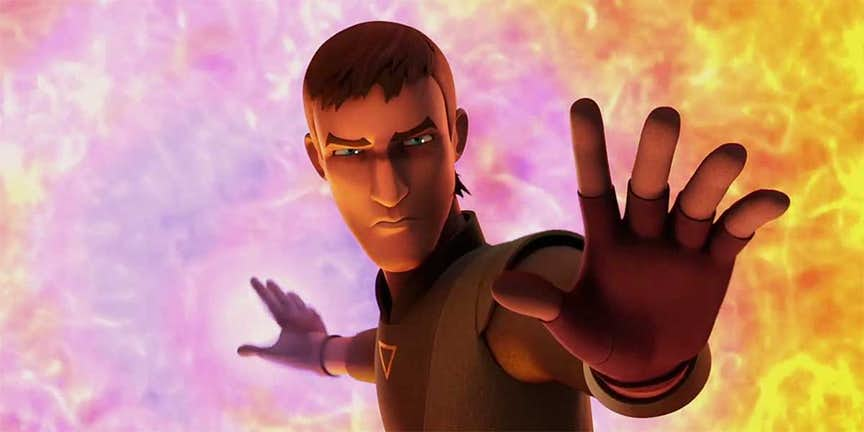
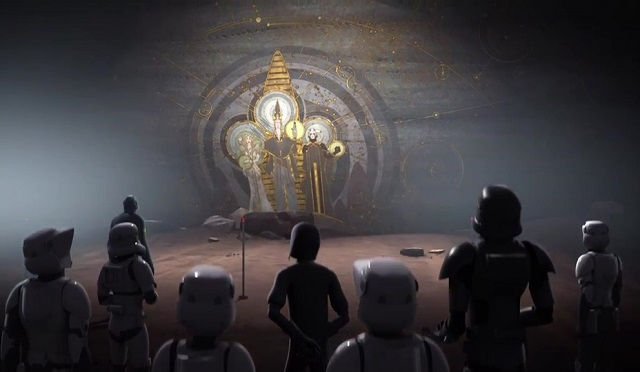
So this week brought us two episodes, but let’s be honest, there’s one major focal point of the two of them: the Lothal Jedi Temple and the fact that it can transport people through time and space. To say that this raises a lot of questions is an understatement of the highest order. We can start with how it’s handled in the episode itself, of course, before going into the possibilities that this might open for Star Wars storytelling in the future. Strap in folks, things are going to get very weird.

The main purpose of the temple within the context of the story and the characters within that story is to teach Ezra one last lesson before the show’s conclusion: letting go. It’s far from the first time we’ve seen a Jedi have to learn this lesson, but Ezra’s situation is very poignant, in that he’s dealing with the death of his Master and surrogate father. Kanan and Ezra’s relationship is one of the closest of any two characters in Star Wars Rebels, so of course when he’s presented with the possibility of doing something to save Kanan’s life he jumps at the chance.

But Rebels twists the script a bit by making Ezra’s temptation not based on the dark side like Anakin’s was once upon a time. This is not some temptation that will lead him down a dark path that will forever dominate his destiny. Ezra is presented with an opportunity that is entirely neutral from a moral standpoint, a literal door through which he can walk to Kanan’s side as the fuel tank explodes. No strings, no dark voice whispering in his ear tempting him with unlimited power. Just reach out, and pull him through.

Of course, it isn’t that simple. If Ezra does save Kanan, it would be at the cost of his own life, and the consequences of that sort of action on the rest of the team would be incredible. Not to mention the timeline of events after Kanan’s death with Ezra already present would create a paradox that may have unimaginable consequences. Faced with these realities, Ezra is forced to stand aside and watch, again, as Kanan dies. Read More
Kanan Jarrus: The Self-Made Jedi

KananArticle1

So. Farewell then, Kanan Jarrus, Jedi Knight.

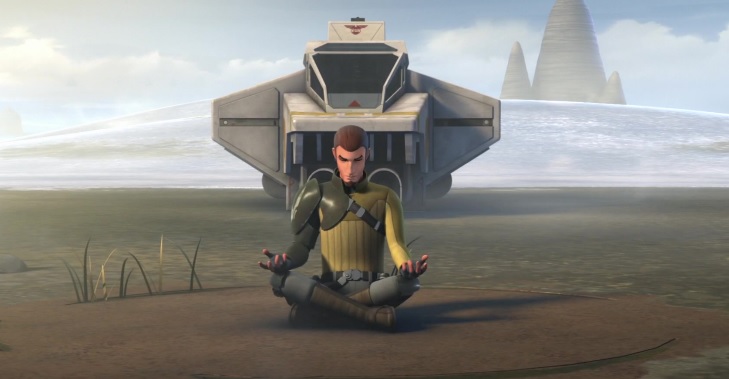
Caleb Dume’s sacrifice in “Jedi Night”, holding back the fire so his family can live to fight another day, stands with the final acts of the greatest masters, Obi-Wan Kenobi and Luke Skywalker. His selflessness will surely inspire the Ghost crew to find some measure of victory, holding back the spread of darkness, and inspiring others in turn.

But Kanan’s journey is also unique, and in the current era of Star Wars “canon”, he stands as the first (chronologically) to forge a path to becoming a Jedi without the structure of the old Order or the guidance of a Master. His knighting in “Shroud of Darkness” raises some interesting questions – what is Kanan’s essential “Jedi-ness,” the thing that earns him this title without the structured progression of Padawan-Trials-Knight-Master? What precedent does it set for Jedi who follow similarly unconventional paths, even decades later? And what does it say about Kanan the person that he achieved all this without that structure?

Read More

It’s Time For the Year of Sabine Wren

sabine-threeseasons

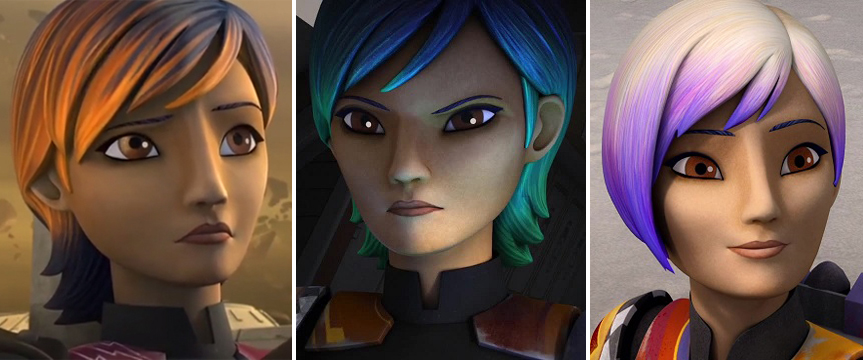
Mike: This week saw the beginning of the second half of the fourth season of Star Wars Rebels—and in less than three weeks the series will have come to its conclusion. While the final fate of Ezra remains a gigantic, some would say overwhelming, question mark, we’ve known since Rogue One came out a year ago that Hera and Chopper survive, at least into the original trilogy era. And how could they not? Hera is a fantastic addition to the Star Wars canon, and the small pile of random appearances she’s accumulated since then demonstrates that creators are clamoring to use her in stories of their own—and once Rebels has finished telling its story they’ll be freer than ever (barring an immediate follow-up series) to really dive into her role in the formal Rebel Alliance and beyond.

But there’s another character every bit as deserving of that increased spotlight, whose fate is also in question. Sorry, Zeb—I’m talking about Sabine Goddamn Wren. While it appears that Sabine’s major character arc as far as Rebels is concerned concluded with her reunification with her family earlier this season, it remains possible, however unlikely, that she won’t make it out of this show alive. And even if she does, will she return to Mandalore and stick to being a local player? Or become an Alliance leader in her own right?

As long as those questions remain open, I get why Lucasfilm would be reluctant to use Sabine elsewhere, whatever the time period—it stinks, like it stinks that we probably won’t get any post-The Last Jedi content for a while yet, but I get it. Dave Filoni is Sabine’s creator, and to the extent that Rebels is telling one complete story it’s fair to let him have the “last word” on who Sabine is, where she’s from, what she wants. Read More

Rebels Revisited: Part of the Family

rr-kanansplode

Mike: Well, you can debate whether or not this was inevitable—lord knows we have—but you can’t debate that it’s happened: Kanan Jarrus is no more. [1]Okay, this is Dave Filoni and it’s possible he’s a wolf now, but that’s beside the point. There are two angles, I think, from which to discuss this development—did it really need to happen, and did they handle it well? I reject the notion that it was absolutely necessary from any sort of continuity standpoint, but I do think in the context of this story it’s dramatically justified. And since fans have been perfectly happy to spend the last few years debating whether Kanan should die, I’d rather not rehash that again here, and instead focus on how he died, and whether Star Wars Rebels managed to earn this moment that, arguably, they knew all along was going to happen.

Just in terms of the artistry involved, the score, the pacing, the characters’ reactions, I thought it was beautifully and naturalistically done rather than some kind of idiot-ball situation where the plot gods reached down and smooshed him because they wanted to (though okay, I could argue that his eyes randomly healing for two seconds was a smidge over the top). But while I never didn’t like it, the more I think about it the more I appreciate how it seems to fit into not just Rebels‘ larger narrative but the overall Star Wars story at this point in time.

In the heat of the moment, and with a couple months off between this episode and “Rebel Assault”, it’s easy to forget how important the TIE Defender factory has been to the last couple seasons, and underestimate how big a deal it is for Pryce to effectively destroy it just to take Kanan down. Both “Jedi Night” and “DUME” even take the extra step of establishing a competition for resources between Thrawn’s Defenders and Krennic’s Death Star project, meaning that the films could have gone very differently with that factory operational and Thrawn coming out on top. And speaking of Thrawn, it sure looks like his and Pryce’s happy working relationship has come to an end—once again, he’s undone not by his own failure but by the rash decision of an underling. Whether Thrawn or Pryce emerge from this mess intact remains to be seen, but unless Rebels gets too wrapped up in Mortis shenanigans to give this plotline a satisfying payoff, I suspect Kanan’s messy demise will prove to be one of the most important events the show has portrayed—and thus, I’d call it very much earned. Read More

References
1 Okay, this is Dave Filoni and it’s possible he’s a wolf now, but that’s beside the point.

No Easy Wins: The Case For Draven

draven

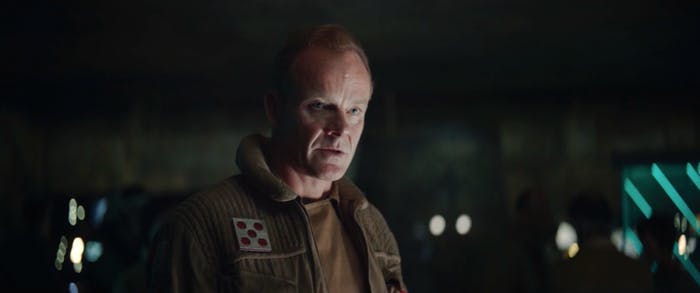
Going into Rogue One my only thoughts on the character of Draven had to do with the since-debunked speculation that he was really Agent Kallus from Star Wars Rebels. After walking out of the film, however, I found that I was fixated upon the Alliance general. Many fans I have talked to say that they disliked the character, or that while they understood his purpose and saw him as a necessary irredeemable jerk they still did not have much love for him. I was honestly surprised by this reaction because for me he was incredibly interesting and I wanted to see more of him as soon as possible.

Throughout Rogue One we see a lot of shades of grey within the Alliance. Jyn, Saw, Cassian, and Draven are the biggest examples of this. Within each of those two duos is one protégé and one old warrior who has given everything to this war dating as far back as the Clone Wars. Saw and Draven are incredibly fascinating to compare to one another. Each man is an embodiment of the shades of grey within the Rebellion, and yet they are vastly different people.

Saw was hardened due to being a ground-level revolutionary. He lost his sister Steela early on and has sworn to do whatever it takes to win. As he explained to Jyn in Rebel Rising, “Steela was the best part of me”. When Saw’s new war against the Empire began, “I was smarter that time. I didn’t make the same mistakes I had when Steela was still alive.” Saw never got to stop fighting. He never stopped being the revolutionary with nothing to lose, and that shaped him into a brutal, violent soldier who would do whatever it takes even if he had to be a monster. Saw lost his sister, his soul, and has to force away his daughter to protect her. Read More