The Audacity of Rogue One: Gray Alliance, Black Empire

HEAVY SPOILERS: ABANDON ALL HOPE YE WHO ENTER HERE
r1-1
Light and darkness

When Disney bought Lucasfilm and brought Star Wars back from the obscurity of tie-in media and into the 21st century of cinema through The Force Awakens, one of the most commonly heard complaints was that the movie was too safe. Unlike the prequels, that for all their failings had tried to explore new narrative territory, the first movie in the sequel trilogy seemed happy to give us three fantastic new characters and then drop them in the middle of common places, well-worn storylines, and a neverending series of cameos and winks to the past.

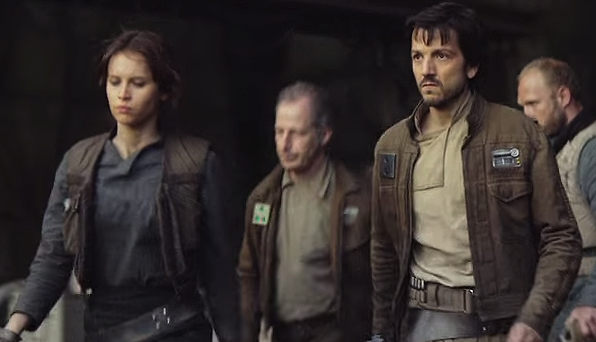
While it can certainly be argued that this nostalgic exercise was exactly what Star Wars needed to be a commercial powerhouse once again, Rogue One takes the opposite approach: it takes place in a very safe point in the timeline, one where X-Wings and stormtroopers and even Darth Vader are common place; it takes one of the most often told stories in Star Wars lore, that of the damned theft of the damned Death Star plans; and what it gives us is the most audacious Star Wars movie so far, one more than willing to alienate its typical family-friendly audience for the sake of telling the story it wants to tell.
Read More

The Expanded Universe Explains, Vol. XIV – The Alliance to Restore the Republic

rogueone-ds-holo

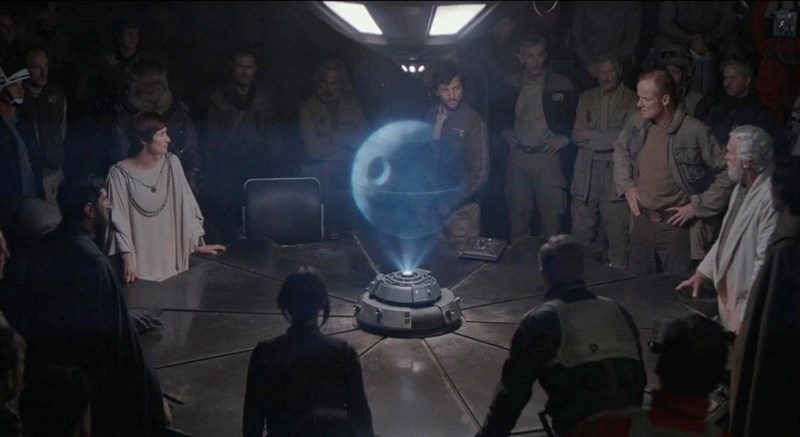
In recent weeks, as the Rogue One hype train reached full speed, a new comment from Gareth Edwards made certain longtime Star Wars fans take notice—in a short featurette for the film, Edwards stated that while the thrust of the film is the theft of the Death Star plans, “through [the heroes’] journey, we see the formation of the Rebel Alliance”. While he could very well have intended “formation” in a metaphorical sense, characters learning to work together and all that, fans wouldn’t be fans if they didn’t at least suspect that he might have been speaking literally—meaning the film will show us the official consolidation of the various lowercase-R rebel cells into the capital-R Rebel Alliance.

While Star Wars Rebels has laid much groundwork for this already, it hasn’t yet depicted such an event, so while Rogue One is situated almost three years after the most recent episodes, it’s entirely possible that a formal Alliance won’t exist until then, implying that when A New Hope begins the organization is only weeks, or even days, old. That would jive well with the most literal interpretation (there’s that word again) of the opening crawl’s statement that stealing the plans is the Rebels’ “first victory”; indeed, the mere existence of a show like Rebels requires such a literal reading—the show wouldn’t last very long if the main characters never succeed at anything, so one must draw a distinction with the Ghost crew’s small, often pyrrhic, victories and the coordinated military victory we’ll soon witness in theaters.

For the Rebel Alliance to form so late in the timeline is a deviation from the Legends version of events, but not as much of one as you might think—likewise, the continuing presence of Jedi within the organization on Rebels seems like a big deal, but it’s nothing us old Expanded Universe fans aren’t used to. So in anticipation of the new canon finally linking up the rebels and the Rebels (whether it happens in Rogue One or not), let’s take a look at how this went down the first time.

Read More

Rebels Revisited: Revenge and Hope

rr-ezramauldathomir

Star Wars Rebels is now at its annual mid-season break, which we usually take as an opportunity to review the first half of the season and speculate some into what might be to come in the latter half. “Visions and Voices” throws some of that out of the window by packing quite a lot of foreshadowing into a single episode that sets up many events of the next part of the show.

This season has been busy building two plots at once: a new foe that the Rebels are going up against just as the disparate cells are beginning to unite, and following up on the events of season two’s conclusion. While most of the season to this point has been concerned with the game of chess that Thrawn is playing and looking forward to his plan to destroy the Rebellion, there has been a lot of follow-up on the events at the end of season two, both in terms of the character dynamics and in terms of the plot itself changing.

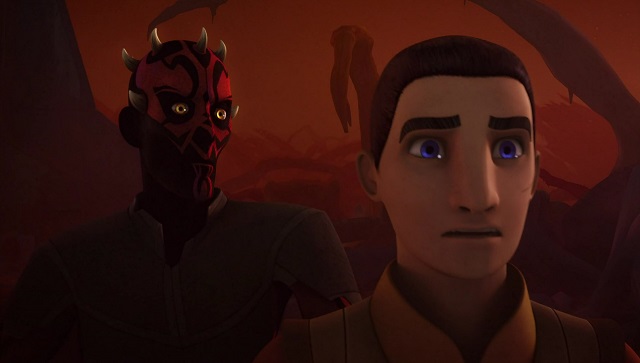
Kanan is blind, and withdrew himself from the others so he could find peace with his condition and with the Force. Ezra has grown, but has entrenched himself even more deeply in his obsession with destroying the Sith. We saw some of these effects at the beginning of the season as Bendu was introduced, the Sith holocron came into play, and then Maul was brought back onto the scene. Read More

In Praise of Qui-Gon Jinn: The Quiet Rebel

QGJ1

Slowly, Yoda nodded. “A very great Jedi Master you have become, Qui-Gon Jinn. A very great Jedi Master you always were, but too blind I was to see it.”

He rose, and folded his hands before him, and inclined his head in the Jedi bow of respect.

The bow of the student, in the presence of the Master.

Revenge of the Sith novelization, by Matthew Stover

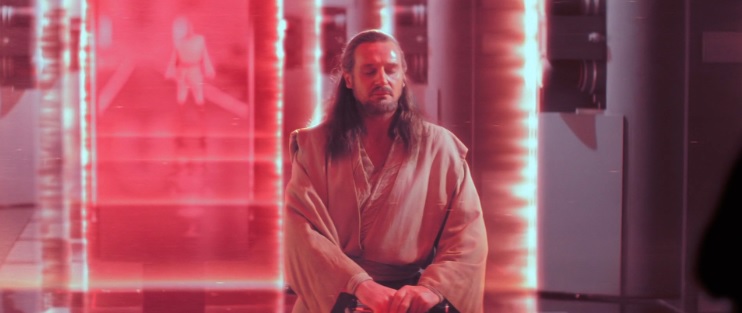
Jedi Master Qui-Gon Jinn appeared in only one Star Wars film, but few characters have had such a profound influence on the direction of the story. For a generation of fans, including myself, he was the mentor, our old Ben Kenobi. Liam Neeson’s return to the role in The Clone Wars was, for me, the highlight of the series: I had been desperately disappointed in 2005 when Neeson’s lines were cut from Revenge of the Sith, but the two TCW story arcs involving Qui-Gon made up for that and then some.

Qui-Gon’s role has also been mildly controversial. Some lay the blame for everything bad that happens – from Anakin’s fall to the rise of the Empire – at his door. Others argue that the character should never have been included at all, and that Obi-Wan should have discovered Anakin Skywalker himself.

For me, though, not only is Qui-Gon the definitive Jedi, he is also crucial to our understanding of what they are, and what they should be. His philosophy and quietly rebellious nature is inspirational, and by exploring his relationship with the Jedi Council, we can learn everything we need to know about the Order and its mistakes. Read More

Rebels Revisited: The Turning of Coats

rr-kallusturn

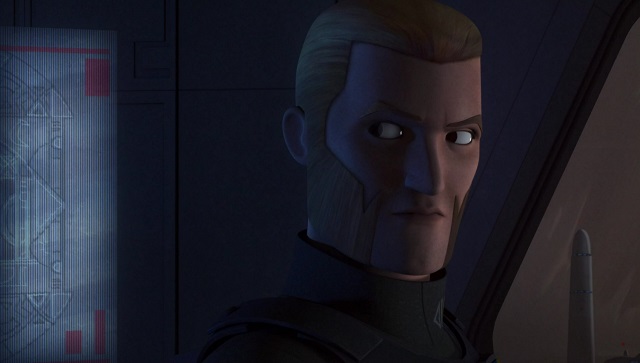
As this column has gone on, we’ve done a lot of discussion and writing on how Star Wars Rebels deals with its characters. With the ongoing plots and stories revolving as much around the journeys that Ezra, Kanan, Hera, Sabine and Zeb have been on as they do around, well, the plot, it stands to reason that we’ve spent a lot of time talking about them. A character that we talked about some but not as often as the others (mostly because he hasn’t featured as much since the end of the first season) is our stalwart Imperial Security Bureau frenemy Agent Kallus.

Kallus popped up again in this season early on as a bit of arm candy for Governor Pryce and under Grand Admiral Thrawn’s shadow, buddying up close to the two of them and seemingly back in good Imperial graces after his rather inauspicious rescue from one of Geonosis’s moons in “The Honorable Ones” back in season two. While his-first-name-is-Agent Kallus has not been the most visible of threats in the show’s later stages, having him come back and Thrawn taking him under his wing promised some interesting new developments to move forward.

At the same time, though, we started getting hints that there was more to Kallus this season than just back to being an Imperial lackey. Our first hint was back when Sabine was helping Wedge and Hobbie escape from Skystrike Academy, assisted by a new Fulcrum and by Kallus himself in a turn of events that stunned Sabine. At the time, it seemed like Kallus was just repaying Zeb for saving his life, and he seemed to intimate as much, implying that it was a one-time deal and not to expect any further assistance. Read More