Walking the Razor’s Edge – The Staff Revisits Infinities

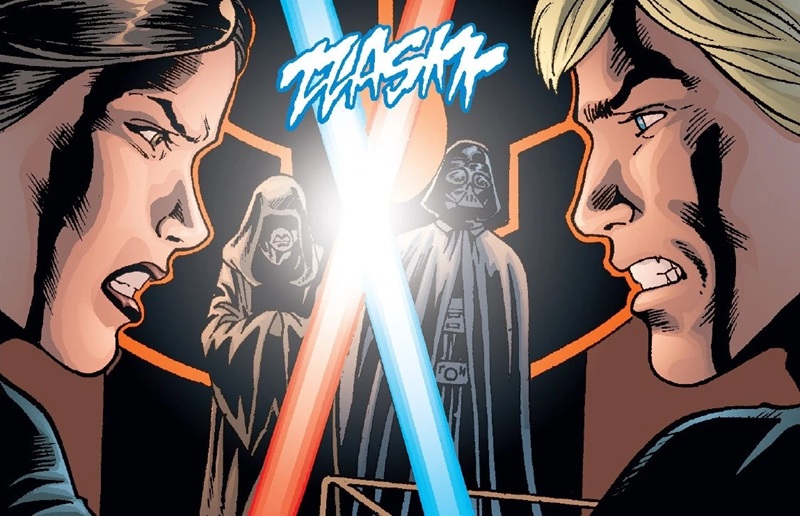
The Infinities series of comics, recently highlighted here by Alexander Gaultier, was basically Star Wars’ version of Marvel’s infamous series What If? Each of the miniseries started with one of the Original Trilogy films, then changed one key moment to see what would happen. The end results were…varied, in this writer’s opinion, but the mere concept of deliberately altering movie continuity was unheard of before then, and it’s a premise that still holds, as Alexander said, unlimited possibilities.

Unfortunately, a few months back, writer Peter David revealed what I’d long suspected—that the series weren’t really as “unlimited” as it seemed. David was originally approached to write Infinities: A New Hope, but his idea was rejected for being “too dark” The story, according to Lucasfilm, still had to end with the good guys winning.

This makes a tiny bit of sense when viewed through Star Wars’ mythological lens; it was foretold that the Force would return to balance somehow, so to go against that would contradict somewhat the very premise of the overall film saga. Nevertheless, why bother with Infinities at all if you’re not willing to screw with things? On its face, the original trilogy is a nonstop razor’s edge, where the slightest tweak at almost any time could have brought ruin to the main characters and the galaxy at large. Giving too many alternate paths to ultimate victory, I believe, does a disservice to Luke, Han and Leia’s struggles—and even the role of the Force itself in the proceedings unfolding as they did. Read More
What Star Wars Can Learn From Disney

In case you weren’t quite sure, my piece a couple weeks ago on What Star Wars Can Learn From Glee was an April Fools gag. But buried within it were a couple nuggets of truth; it’s hard to craft a satirical argument like that unless at least a tiny part of you can see its way to believing it.

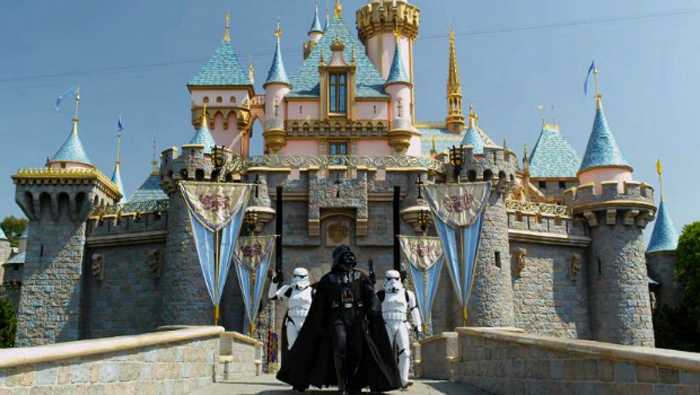
To wit: the Disney purchase really does mean a new era for Star Wars, in which the old rules don’t apply—or at least don’t need to. Just ask Marvel. The film slate exemplified by 2012’s The Avengers and continuing into the foreseeable future was hard for an independent studio to even imagine, but much like the Avengers themselves, Marvel’s vision combined with Disney’s financial backing brought about something that just couldn’t have worked otherwise.

I truly believe that this desire to take a successful property to the next level also motivated Disney’s purchase of Star Wars. There’s certainly an argument to be made that Star Wars can’t sustain a new movie every year, or every other year, or whatever the reality ends up being, in perpetuity, but if you’re willing to entertain the alternative (by which I mean a success rate at least on the level of the Expanded Universe’s storytelling), then at least in theory, the possibilities are greater than many realize. Read More

Fixing Wookieepedia: A Helpful Guide

Near the end of my piece on the Wookieepedia “breast” controversy earlier this week, I made the case that the best way to change the offending article is to change the culture of the site with an influx of exactly the kind of people who had been offended. Staying away from a community whose actions offend you is a reasonable response, and I would never tell someone to do something they weren’t comfortable with. But I’m kind of a confrontational person by nature, and I believe strongly in the “keep your enemies closer” philosophy. The last time I felt like a certain group of people was hostile to my concerns, I started my own discussion thread specifically for those concerns—and now, several years later, it’s made a huge difference in the tenor of that particular community. Read More

What Star Wars Can Learn From Glee

As we’ve said over and over on this site, D-Day didn’t just mean more Star Wars movies—it meant a new paradigm entirely for the franchise. The old ways of attracting new fans are slowly but surely producing diminishing returns. It’s time, I believe, for Star Wars to expand its horizons, and take lessons not just from other successful “geek” franchises, but from all sorts of broadly popular media, so as to attract new generations of people who aren’t already lining up for Comic-Con every year.

One great example of a franchise that’s phenomenally successful, critically beloved, and primed for crossover pollenation with Star Wars is, of course, the TV series Glee. Allow me to extrapolate. Read More

My Way or the Hyperlane – Feminism, Slut-Shaming and the New Fan Conservatism

sabine

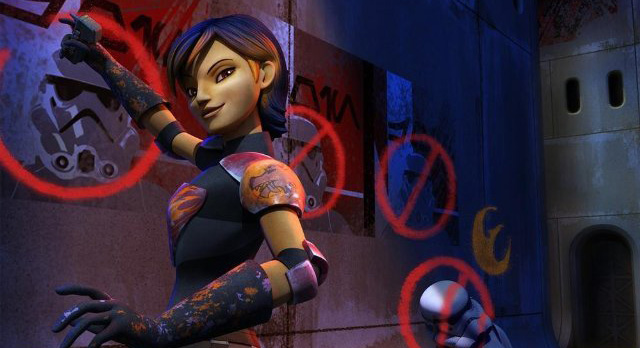
Mike: In addition to the manymany larger conversations that sprung up in the wake of the reveal of Star Wars Rebels‘ main cast of characters last month, some of us here at Eleven-ThirtyEight noticed an odd undercurrent to people’s reactions to both Sabine and Hera; well, maybe not odd, but unfortunate. Loosely speaking, it seemed as if people had certain preconceived ideas about what a good female character should be like, and were judging the females of Rebels one way or another less by their apparent merits and more by what they found “acceptable” for Star Wars—or even for popular fiction generally.

This warranted a response of its own, I felt, but as someone who’s fully aware of the specter of “mansplaining”, I asked guest writer Mia Moretti, author of the aforelinked™ “race factor” piece, to join me for a discussion of these issues. Read More