Put Down That Weapon: Luke Skywalker, His Masters, and Acts of Instinct

tlj-saberhandoff

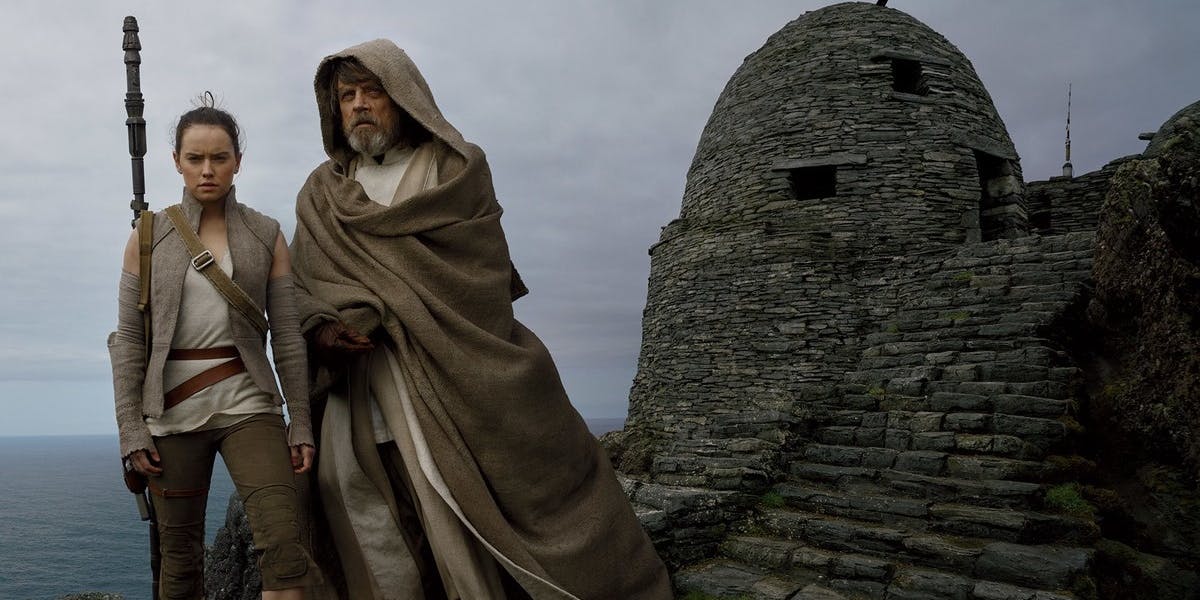
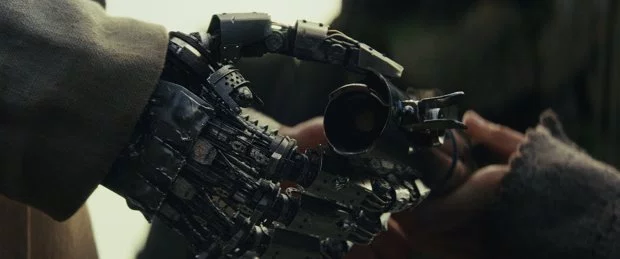
Of the myriad moments in The Last Jedi that have caused an uproar among the fandom, it is Luke Skywalker’s actions in Ben Solo’s hut that have proved the most divisive. Given the Rashomon treatment, we see the scene three times, with Luke withholding key information in the first telling – namely that he had ignited his lightsaber with the briefest view towards murdering his nephew.

Understandably, a sizable portion of fans feels betrayed by this moment, and that it is out of character for Luke, a man who saw the good in his fallen father when nobody else believed, the man who threw away his lightsaber while staring down pure evil, proudly declaring his allegiance and heritage as a Jedi. A figure of warmth and optimism would not, could not contemplate such a barbarous act… surely?

The Last Jedi is many things; among them it is a comment on Star Wars and Star Wars fandom itself – a concept that is already being explored more than adequately. It is also, within the narrative, an examination of what it means to be a Jedi, and what values that involves. Writer-director Rian Johnson, via Luke, is explicit in his view of the classic, prequel-era Jedi Knights: that they were heinously derelict in their duty and allowed Darth Sidious to create the Empire while exterminating their order, but is only an invitation to dig deeper into the film’s (and Luke’s) view on the differing ideologies of the saga’s other two key Jedi characters: Obi-Wan Kenobi and Yoda. Read More
The Force and I Have Different Priorities: The Last Jedi and Life as a Star Wars Character

reyluke-meditate

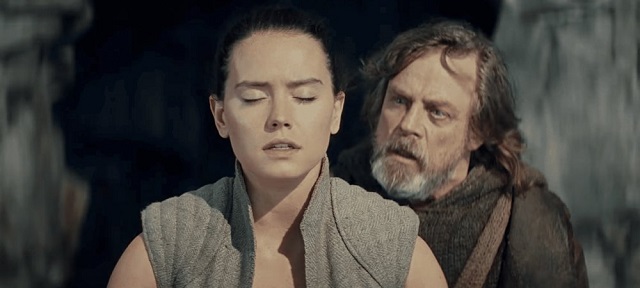
When Luke agrees to train Rey in The Last Jedi, the first thing he asks her to do is explain the Force. She says it’s the power to “control people and make things float.” It’s played as a joke, one the audience is expected to be in on. But really the joke’s on us. While we’ve all heard Obi-Wan and Yoda explain what the Force is countless times, the Star Wars fandom is constantly proving that we still don’t get it. Every time someone suggests Jar Jar’s Drunken Fist fighting competence proves he’s a Sith, or writes a story implying that the Force blew R5-D4’s motivator, we show we still think of the Force like Rey—just a box you have to check to unlock the skill tree of cool powers.

Part of the problem is that the explanations Jedi like to give aren’t actually very clear. Calling everybody “luminous beings” doesn’t shed much light on the question. There’s a simple answer, but it’s dressed up behind a veil of Orientalist mysticism that makes it hard to extract. I can’t say it ever occurred to me until I read Nick Lowe’s Well Tempered Plot Device. Fair warning: once learned, it can’t be unlearned.

The Force is the plot.

It’s that simple. Every single thing in the story, from the luck of a sabacc draw to the very fabric of the entire GFFA, is the Force. “Nothing happens by accident” because everything in the story is a conscious decision by the author. Read More

The Physics of The Last Jedi

lastjedi-bombers

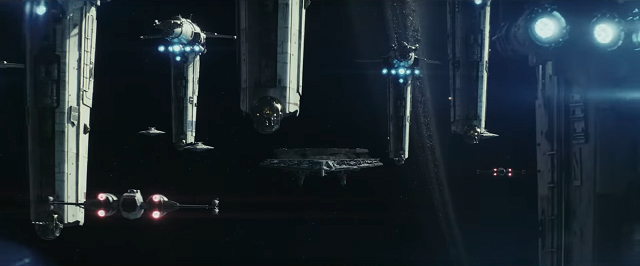
In the concluding remarks of my previous piece about the physics of Concord Dawn, I argued that one could use science to think about how something unusual in a work of fiction might happen, and its consequences and implications, rather than just calling it a flaw that was not addressed and must be pointed out. After The Last Jedi‘s release, however, many chose this second option when faced with an element from the film’s opening sequence: bombers in space.

The argument generally goes like this: it makes no sense that Resistance bombers would attack a First Order Dreadnought by flying over it and dropping their bombs, since everything happens in space where there is no gravity, and therefore the scene was just filmed that way because that’s how bombers operate on Earth and it looks cool. Mind you, that might well be the actual reason! But since we’re thinking about physics, we could go a bit deeper than this and see where it takes us. One can’t invoke the planet’s gravity to explain bombs falling onto the Dreadnought, since the ship is not oriented with its ventral side directly facing D’Qar, although its artificial gravity seems to extend a bit beyond its topside hull (as seen when debris from explosions and destroyed TIE fighters fall towards it). There’s also artificial gravity inside the bomber, as an important plot point makes us painfully aware, and that alone could have propelled the bombs away. But it turns out that gravity was never necessary—according to TLJ’s Visual Dictionary, the bombs are launched from the bomber by electromagnetic means. Read More

Fleeing The End: Why I Finally Watched The Force Awakens—and The Last Jedi

reyluke-vanityfair

Two years back, I did an article on why I was holding off from seeing The Force Awakens. I watched it just over a week ago, with The Last Jedi on the next day. (Reviews for both TFA and TLJ.) Did my expectations of what I thought I would make of TFA actually pan out? I think so, but with one difference in that I did not really see the same movie as others would have seen two years gone.

Nope, the version I saw was technically the same, but I saw it having a lot more information about how it all came about than any viewer would have had then. Did that change it? It bolstered and supported the film’s weaknesses. Even a partial, incomplete account of where the First Order came from beats nothing, similarly a general picture of how the Republic works beats nothing. I would disagree much needed to be done to address these in the film, each could have been covered by a single line, say of First Order agents paralyzing the Republic politically, an older Resistance member quipping to another about a sense of déjà vu. Small details to be sure, but they would have helped the film stand more on its own.

And that ten percent of the film I expected to dislike? Well, the Bloodline book did de-fang a lot of what TFA does with Han and Leia, by dating the collapse of everything for them as roughly six years earlier. That changes the picture quite a bit and lessens the impact. It’s notable that Han’s claim to be good at smuggling is complete bullshit. He wasn’t that good at it thirty years previous and age hasn’t made him any better. As an excuse for a man who blames himself for things he should not, it does work. Leia’s focusing on what she can do, rather than what she cannot – like convincing Han he should not blame himself – that works too. Read More

Farewell, Old Friend – Saying Goodbye to Ackbar, and the Lessons We Learn From The Last Jedi

ackbar-raddus_f7973332

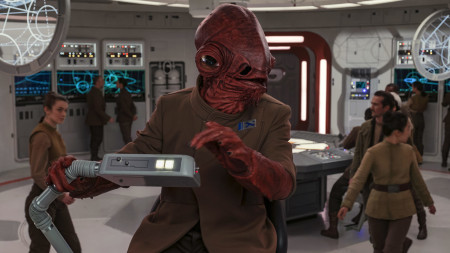
Fandom is a strange, funny thing. We all identify with certain characters for varied reasons, but what matters most is simply that we love them. For some, that favorite is Luke Skywalker, Jedi Master. For others it is Constable Zuvio, whom sharp-eyed fans can spot for a scant instant in The Force Awakens. Whether they dominate the screen or are only covered in supplemental materials, at the end of the day our favorite characters are who they are. Period.

For me, it has always been Admiral Ackbar. My admiral.  The victor of Endor, Kuat, Kashyyyk, Jakku, and so many other countless engagements. Hero of the Rebellion, New Republic, and most recently the Resistance. Tough, loyal, at times gruff, but always a leader and a bulwark his friends could count on. In pop culture, Ackbar is remembered for “It’s a trap!” and the countless memes that line has generated. For many of us Star Wars fans, he was the quintessential admiral.

He dies in The Last Jedi.

Ackbar meets his end on the bridge of the Star Cruiser Raddus, doing his duty until the last moment. For those of you not as familiar with the current canon, Ackbar leaves a quiet retirement to come to Leia’s side when she forms the Resistance. He leaves the safety of his home on Mon Cala, determined to fight one more time for the freedom and liberty of the galaxy. He’s over ninety years old, but that doesn’t matter. Ackbar is back – and he does his duty. Read More